
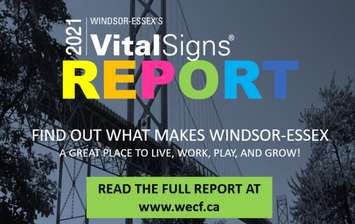
A new report measuring the quality of life in Windsor-Essex suggests despite challenges, most residents are happy.
The annual Vital Signs report said 87 per cent of respondents to this year's survey said, in general, they are content. It also suggested most think we're doing "okay" in the region, although we could do better.
The report, compiled by the WindsorEssex Community Foundation, provides a snapshot of how the region is faring in ten separate categories that measure such metrics as housing affordability, food security, access to higher education, and health and wellness. This year, it reflects a consistent grade of "C"; although our youth score quality of life a little better, a "B."
"We were happy to see that our youth are pretty happy," said Executive Director Lisa Kolody. "So they have a perspective of hope and optimism."
Top priorities identified in the 2021 Vital Signs Report included a living wage to employees, expanding social programs for at-risk residents, creating a regional transportation system, and improving access to mental health programs.
Kolody said over the past few years, more people have identified mental health as an area of concern over the past couple of years. There has been an increased focus on it during the pandemic.
"It's partially because of the pandemic, and it's partially because people are paying more attention to it," she said. "Years ago, it wasn't something that people were willing to talk about much, and I think the community has done a lot of work around raising awareness about mental health and saying it's okay to not be okay."
Another priority is providing affordable housing. In that, the region scored an "F" for the third consecutive year, which does not surprise Kolody.
There is a greater focus on affordable housing at all levels of government, and while she counts that as a positive, she believes it will take some time for those efforts to bear fruit.
"It might take a few years for a few of these options to take effect -- but it does reflect what's happening in the community," said Kolody.
Grades have fluctuated over the nine years the foundation has issued the report. In the past five, the most notable changes have been in how safe residents feel. In 2016, the region scored a "B." It got a "C" this year.
Food security scores have also fallen in that time frame, but 54 per cent believe the region is "on the right track" when it comes to offering nutritious food at affordable prices.
There are indications residents have a growing environmental awareness. Eighty-seven per cent think Lake Erie's health is "extremely important."
It also suggested the population is stable, with 86 per cent reporting they have lived in the region for over a decade. Almost two-thirds are either married or common law, and nearly a quarter of participants make more than $80,000 a year.