Before you open your wallet for a charity this holiday season, the Better Business Bureau suggests doing your homework to avoid being a victim of fraud.
According to the BBB, most charities see about one-third of their annual donations given at this time of year. But it warns not all charities vying for your hard earned dollars are legitimate.
"A few months ago there was a charity online that was soliciting for donations that didn't have a charity number and then after an investigation they disappeared," said Ashley Casselman, spokesperson for the BBB Serving Western Ontario. "We see it every year."
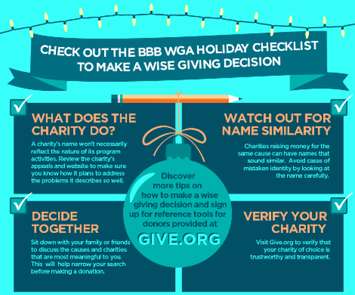
Casselman suggests people should hold off donating to charities impulsively and instead, allow time for proper research.
"You're going to want to resist rushing. If a charity is legitimate they are going to take your donation tomorrow as well as on the spot," said Casselman. "You want to confirm that it is an actual charity. That way, you aren't wasting your donation that could be going toward a charity that is going to use it correctly."
Other tips being offered by the BBB to protect donors include; taking note of the charity's exact name to avoid a case of mistaken identity, being wary of heart-wrenching appeals, and pressing for specifics.
"Ask whether the donation is going to help a certain program, if it's going to stay locally, or if it's pooled into a national program," said Casselman. "Look if they have a registered charity number on a pamphlet, confirm that online, or contact the charity that you think it is just to confirm that they are soliciting door-to-door or in the public."
The BBB evaluates charities using Standards for Charity Accountability guidelines. The results of those evaluations are published three times a year in Wise Giving Guide magazine.
Anyone who happens upon a fraudulent charity is advised to call the police and report it through the BBB's scam tracker at www.BBB.org.
To check the status of a charity visit www.Give.org.