
Grey County councillors heard new details Thursday about how a potential regional transit system could operate across four neighbouring counties, as planners begin shaping early service concepts for the region.
An update on the Regional Transit Study was presented to council by Dillon Consulting Limited, which is leading the first phase of work examining the feasibility of a unified transit network across Grey County, Bruce County, Dufferin County, and Wellington County in partnership with Saugeen Mobility and Regional Transit (SMART).
The presentation outlined early findings from the study’s public engagement and technical analysis, including possible transit corridors, service models and how existing transportation services could be better coordinated across county boundaries.
Consultants reported strong public participation during the first phase of engagement, including a community survey that received nearly 3,800 responses from residents across the four counties. The feedback is helping planners better understand how people currently travel and where gaps in transportation exist.
The study was launched to address growing transportation needs in rural communities, where public transit options remain limited and travel between counties can be difficult without access to a personal vehicle. A staff report noted that transit needs are increasing across the four counties.
“Transit needs across the region continue to grow due to rising population, an aging demographic, and increasing costs of living,” the report stated.“ Many communities currently have limited or no public transit options and traveling between counties without a personal vehicle can be challenging.”
According to the presentation, improving connections between communities is a key focus. Early concepts include inter-community corridors linking major population centres and essential destinations such as employment hubs, healthcare facilities and education centres.
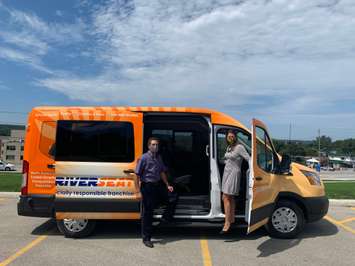
The study is also examining the potential role of on-demand transit services in rural areas where population density is lower and traditional fixed routes may not be practical. Planners told council that a combination of scheduled routes between larger centres and flexible on-demand services for smaller communities could help create a more efficient regional network.
Another major focus of the presentation was the possibility of integrating existing transit services across the region. The study is exploring whether counties could share resources such as vehicles, dispatch systems, booking platforms and administrative services to improve coordination and reduce operating costs.
Governance models are also being reviewed as part of the study. Consultants outlined options ranging from maintaining separate local services with coordination agreements to creating a more formal regional governance structure overseeing transit across the four counties. A unified network could help expand service to communities that currently have little or no public transportation while improving connections between existing services.
The Regional Transit Study is currently in its first phase, which focuses on identifying service options, cost structures, fare strategies and opportunities to integrate existing transit systems across the region.
A second round of public engagement is expected to begin later this month as the project team refines potential service models and network design options.
A draft regional transit plan will be presented to the four county councils and the SMART board in May 2026 for consideration. If endorsed, the project would move into an implementation phase between 2026 and 2030, supported in part through provincial funding from the Ontario Transit Investment Fund.