Jennifer Voth is not sure exactly how many children in Windsor and Essex County live with a parent who has a mental illness, but the research suggests 12 per cent of Canadian children do.
In this region, that could mean thousands of kids have a parent who suffers from depression, anxiety, schizophrenia, or bipolar disorder. Navigating an illness like any one of those can be challenging for an adult, let alone for a child between the ages of eight and 13.
Voth is a research associate at Hotel Dieu Grace Healthcare and the project lead on a new effort to educate children and youth about their parent's illness, and more importantly that it is not their fault.
The project was funded by a $50,000 innovation grant from the Ontario Centre of Excellence for Child and Youth Mental Health. Dr. Mary Broga, executive director of Lead Agency for Child and Youth Mental Health, was the grant's executive sponsor.
"Together, we designed and executed a series of Design Lab workshops to gather information about needs, experiences, and potential solutions," explained Voth. "We really wanted to hear from these groups on what they thought would be the best way to help youth."
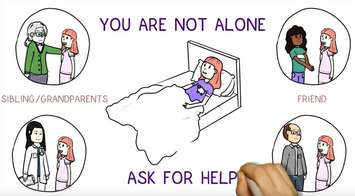
What they came up with was a video that parents or clinicians could show their children.
https://www.youtube.com/watch?v=QWiwTJGiPrk&feature=youtu.be
"The video is engaging, short, and displayed in a way that kids can get information about this subject in privacy and at their own pace," said Voth.
She said it is essential children understand key messages; they are not alone, and it is not their responsibility to make their parent better.
"We found that one of the main needs for children and youth was age-appropriate information and education about mental illness, about their parent's mental illness in particular, and how do they cope with these experiences," said Voth. "Our research showed that improving mental illness knowledge is actually an important resiliency factor."
Studies have shown family history may increase the risk of developing a mental illness.
Through their research, the group also found a lack of services designed to support families coping with severe mental illness. In addition to mental health services, families also need practical supports like childcare, transportation to and from appointments, housekeeping, and respite for family caregivers, which sometimes include children.
"It's critical to families' wellbeing, and it can help to avoid, or maybe reduce family stress," added Voth.
The next step is to share their findings with local organizations and service providers.