
Nearly a third of the children living in the riding of Windsor-West are living in poverty.
That ranks 15th of all 338 ridings in Canada.
A Campaign 2000 report released on Monday reveals Windsor-West has nearly 8,700 children living in poverty, giving the riding one of the highest child poverty rates in the country.
Windsor-Tecumseh has almost 5,500 children living in poverty, or roughly 23%, while the riding of Essex has nearly 2,100 children living in poverty or almost 8%.
The group committed to ending child and family poverty says the latest data paints a stark portrait of inequality in Canada with high and low-income families living in close proximity while divided by wide social and economic gaps that leave too many children hungry, sick and stressed beyond their years.
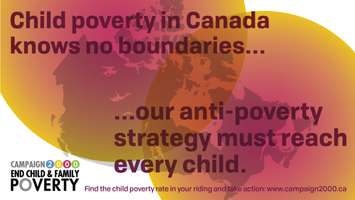
“Child and family poverty knows no boundaries in Canada: it is a reality in every single riding. Poverty means there are too many children suffering hunger, ill health and stress beyond their years in communities across the country,” says Anita Khanna, Campaign 2000’s national coordinator. “Given Canada’s wealth, no child should go to bed hungry. No parent should be forced to choose between paying rent and buying medication or miss out on work or training for lack of quality affordable childcare. With every riding affected by poverty, every riding will benefit from a strong federal strategy.”
It also says that the federal ridings with the highest levels of child and family poverty are home to a higher proportion of Indigenous, racialized and immigrant communities, and single-parent families.
The Campaign 2000 report shows that ridings with the highest child poverty rates have the highest unemployment and lowest labour market participation rates. They also have the highest proportion of renters and people spending more than 30% of their income on housing.
The report shows how persistent discrimination and inequities are underlying factors in poverty, rather than mere bad luck or poor individual choice.
“With every single federal riding in Canada home to significant numbers of children and families in poverty, all communities, all Members of Parliament and all political parties have a stake in the eradication of poverty in Canada,” Khanna adds. “The long-awaited and historic Poverty Reduction Strategy must finally harness the political will, dedication and targeted investments required to ensure no child or family lives in poverty in any corner of Canada. “After decades of waiting for federal action, the first Poverty Reduction Strategy must ensure Canada stops only tallying the number of children in poverty and starts to number poverty’s days instead.”
Canada is expected to have its first federal Poverty Reduction Strategy within weeks.