
An updated nuclear emergency plan in Amherstburg is going to take more money and more negotiating to get done.
The town is in what's considered the primary zone of the Enrico Fermi II nuclear power plant near Monroe, Michigan.
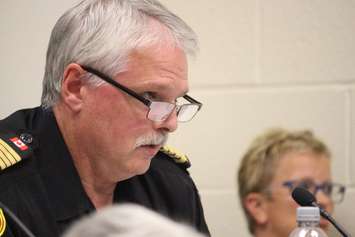
"The probability of any type of nuclear incident is extremely low," says Lee Tome, deputy fire chief for the Town of Amherstburg . "On the other hand, if something did happen the consequences could be extremely high."
Tome says the $25,000 the municipality receives now from the nuclear plant for emergency preparedness isn't enough.
"I believe Fermi [II] will step up to the plate and assist us," says Tome. "We've been at $25,000 for I don't how many years. It's time to look at our entire program and make sure that we're prepared and there's going to be a cost to that."
Tome is working with provincial authorities to schedule a meeting with DTE Energy — which owns the nuclear plant — to address the funding issue along with other emergency protocols.
"We're probably not going to get human resources coming over from Fermi [II] to assist us in the event of a nuclear incident," says Tome. "What we're looking for is to hammer out some type of agreement on who will be here in the event of a nuclear incident."
Tome says a request for a meeting was sent off to the province earlier this summer, but has yet to hear back.
In the event of a nuclear-related crisis it is the province that's charged with taking the lead on the emergency response. However, Tome says a recent exercise found gaps in the current plan and he's working to see those addressed.
Amherstburg's plan has already been updated to include a 16 km primary zone — the American standard for the type of nuclear power produced at Fermi II. The primary zone is used for emergency planning.
The revision scraps the previous 23 km primary zone in place in Amherstburg. However, Tome stresses there was no basis for the previous primary zone and no governing body or other authority had a justification for the specification.
"We can't find any scientific evidence for why it was ever at 23 kilometres," says Tome. "The US standard for boil water reactor has been 10 miles. The US government has reviewed that in the past few years and left it at 10 miles or 16 kilometres."
Tome adds the updated primary zone is 6 km larger than the equivalent Canadian standard.