
After three years of developing a process, the city now has more options in dealing with speeding cars.
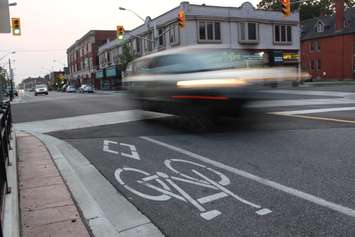
Aside from the obvious police enforcement, staff may now do things like narrow roadways, add bike lanes and move curbs to help reduce speed.
Mayor Drew Dilkens says the public will have a say in what type of traffic calming measures, if any, will be used in their neighbourhood.
"Eight-five percent of the cars down the street would have to be going at least 10 km/h over the limit or the street would have to have more than 1,000 vehicles per day," he says. "Then it would move to the next phase. The next phase would involve an analysis of different options that the public would then have a chance to go out and vote on."
The new policy allows council to prioritize which areas to target first. "Before we didn't really have a lot of options available," says city engineer Mark Winterton.
"Everybody just thought four-way stop or speed bump -- that was it, that was all that was really considered."
Winterton says some of the options are inexpensive, such as paint to narrow the road or add bike lanes and moving some curbs. Council may have to build the cost for traffic calming into its 2016 budget.