

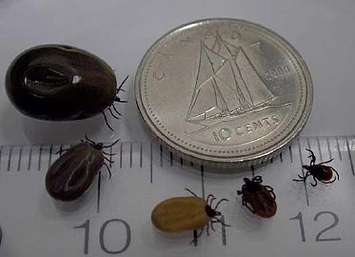
Lambton Public Health saw a significant increase in the proportion of blacklegged ticks collected in 2014.
26 per cent of ticks submitted were identified to be blacklegged ticks, which is up from less than 3 per cent in 2013.
Supervisor of Heath Protection Lori Lucas says ticks can be transmitters of Lyme disease, but need to be attached for greater than 24 hours to be a risk.
[audio mp3="http://blackburnnews.com/wp-content/uploads/2015/05/Lucas-4-Lyme-symptoms.mp3"][/audio]
Symptoms usually occur in one to two weeks, but can occur as soon as three days, or as long as a month after a tick bite.
None of the ticks submitted to date have tested positive for the Lyme disease bacteria.
For protection against tick bites:
- Be aware of tick habitat (tall grass, bushes, and wooded areas). Stick to trails and avoid direct contact with plant growth.
- Wear closed-toe shoes, long-sleeved shirts and pants
- Pull socks over pant legs to prevent ticks from crawling up legs
- Wear light-coloured clothes to spot ticks easier
- Use insect repellents that contain DEET (active ingredient to keep bugs away). Repellents can be applied to clothing as well as exposed skin. Always read and follow label directions
- Shower or bathe within two hours of being outdoors to wash away loose ticks
- Do a daily "full body" check for ticks on yourself, children and pets
Only ticks found on humans or human-related cases can be submitted to Lambton Public Health for identification.