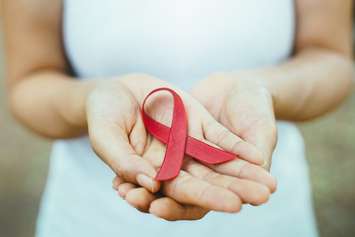
December 1 is World AIDS Day, and Huron Perth Public Health (HPPH) is raising awareness and drawing attention to the day as an educational opportunity.
Since 1988, World AIDS Day has served as a time to recognize and honour those affected by the virus. According to UN AIDS, an estimated 44 million people worldwide have died from AIDS-related illnesses since the epidemic began, and over 40 million people are currently living with HIV. In Canada, about 70,000 people are living with HIV.
Thanks to many advancements in medicine, HIV is now a treatable condition and is no longer a death sentence. HIV cannot be passed on through casual contact, such as shaking hands, hugging, kissing, or sharing food and drinks. It can only be passed on through direct contact with specific body fluids, like blood, that contain enough of the virus to transmit HIV.
HPPH officials point out anyone could contract HIV, no matter their age, gender, sexual orientation, or racial identity. However, HIV stigma continues to cause harm and misinform people about the actual nature of the disease.
That’s why making testing easy and stigma-free matters. Knowing your HIV status starts with testing. HPPH offers free and confidential HIV testing by appointment at sexual health clinics located across Huron and Perth counties. To learn more about services offered at HPPH sexual health clinics, or how to book an appointment, visit www.hpph.ca/sexualhealth.
HPPH has also recently partnered with GetaKit, which offers at-home and lab-based testing for HIV. To learn more about GetaKit, visit www.getakit.ca.
"While there is no cure or vaccine for HIV, people living with the virus today can expect to live long and healthy lives," said Julie Bergman, public health nurse at HPPH. "A medication called antiretroviral therapy can lower the amount of HIV in a person’s body to undetectable levels, keeping their immune system healthy. This also means that people on effective HIV treatment can’t pass the virus on to their sexual partners."
This World AIDS Day, join HPPH in wearing a red ribbon or scarf to show your support for people impacted by HIV and AIDS. For more information and to get involved, visit www.redscarf.ca.