
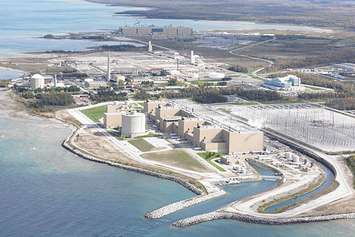
Bruce Power is defending its operations on Lake Huron following criticism from the Saugeen Ojibway Nation (SON) over its "Nuclear Fish City" livestream.
In a statement to CKNXNewsToday.ca, the company says the warm-water plume seen in the video is a normal byproduct of its cooling process and is tightly regulated.
"Like many industries that use lake water for cooling, Bruce Power returns water to Lake Huron at a slightly higher temperature, creating a small, localized warm-water zone which can attract certain fish species," spokesperson Maggie Tieman said. "Protecting Lake Huron is a core priority for Bruce Power, and operations are governed by strict federal and provincial environmental regulations."
The Earth Day livestream drew attention for showing dense schools of fish gathering near the plant’s outflow, a scene that was widely promoted as a rare look at underwater life in the Great Lakes.
But Ryan Lauzon, who advises SON’s Environment Office on aquatic issues, says that picture doesn’t tell the whole story.
"As a fish biologist, I love fish...that’s exciting," Lauzon said. "The problem...there really wasn’t any discussion about why all these fish were actually congregating, and actually the risk that those fish can have by all congregating right at the nuclear plant."
Bruce Power says its systems are designed to limit those risks, noting intake structures are located deep offshore and operate at low speeds to allow fish to avoid being drawn in.
The company also points to changes made after a major fish mortality event in 2025, when millions of gizzard shad died near the facility.
"Following the unprecedented fish event in 2025...Bruce Power promptly implemented additional protective measures," Tieman said, including nets, deterrent systems, and enhanced monitoring using sonar and cameras.
Those steps are being developed with regulators, researchers and Indigenous partners, with the company saying ongoing engagement with SON is helping shape its approach.
While Bruce Power emphasizes regulation and mitigation, SON continues to call for more transparency and accountability, particularly around past fish kills and what isn’t visible in livestream footage.
"I really want somebody watching the footage to have all the information," Lauzon said. "It’s really nice to watch all these fish, but they need to be aware that these fish are actually in danger as a result of them all congregating together."