

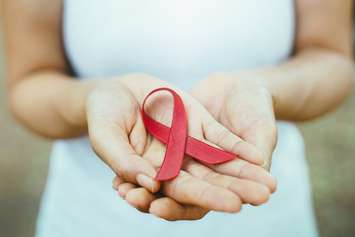
December 1 is World AIDS Day, which raises awareness of the HIV/AIDS virus and remembers those who have lost their lives to the disease.
Huron-Perth Public Health Nurse, Jane DeBlock, says the disease is still deadly for many around the world, and though improvements have been made in the treatment of it, it's important to remember how impactful it remains worldwide, especially in certain parts of the world with poor healthcare means.
"It remains a significant taker of life in the world, globally. To lose sight of it would really be putting our heads in the sand, because it's not over. There are still lots of people who live with HIV globally, disproportionately in certain areas of the world more so than others. But, certainly, it's still around and we really can't lose sight of it. It's still here," DeBlock stated.
DeBlock says she hopes everyone reflects on the continuing impact and harm that HIV/AIDS continues to have on so many around the world, and that we all educate ourselves about preventing the spread of the disease and the ease of testing available now.
Luckily, DeBlock notes that public perception and knowledge of the disease has improved since it first became an issue roughly 40 years ago, but she says it's important to not become complacent.
"I think that we really have to keep thinking about it, and hopefully public opinion will not become complacent, that is the worry. I do think, though, that there is a movement of people that really understand that there really is a stigma when it comes to HIV and AIDS, and it used to be very negative and we thought it only belonged to certain pockets of people. But indeed, we know that anyone can be infected with HIV and AIDS," explained DeBlock.
Unfortunately, a stark reality now is that the disease afflicts many children in impoverished and developing nations.
"We have a significant group of children, globally, that are infected with this virus, and actually that's the group that's least likely to know that they're infected, because of the testing, because they're children and they're young. They don't know they have it, they haven't had the usual kind of risks that we all thought were associated with it," DeBlock noted.
DeBlock says there is still a stigma surrounding the disease, but things have improved from 40 years ago, when the perception was indeed that it only affected certain groups. Thankfully, as DeBlock explains improvements have been made in the treatment of the disease and preventing the spread.
"You know, one of the big things is access to testing. It's a lot easier to get a test, there's point of care testing that can give you a result right away. There's more places people can go to get testing done. So number one, it's easier to know your status, reactive or non-reactive would be the proper term," DeBlock shared.
Testing has mitigated the spread, and DeBlock says the actual treatments of the disease have massively improved.
"It's gone from taking hand fulls and hand fulls of pills several times a day, to maybe a few pills. Or, what's in the future and hopefully coming globally is an injection that may last a long time. Those are all things that have been worked on. So, the amount of medication is decreased and that improves somebody's quality of life so much, not having to swallow all those pills several times a day," said DeBlock. "The other thing that's really made a difference is the whole U=U thing, which stands for Undetectable=Untransmittable. So we understand now that if a person is taking a regular anti-retinal viral therapy, their viral load for the infection can become so low that it becomes impossible to transmit the virus to someone else."
A livestream of the World AIDS Day vigil in London is available to stream tonight, organized by Regional HIV/AIDS Connection. The vigil will be held from 7-8 p.m. at Innovation Works, 201 King Street in London and will also be live streamed at redscarf.ca/vigil.
People can also honour World AIDS Day by wearing a red ribbon or scarf. December 1 also launches the start of Indigenous AIDS Awareness Week in Canada.
More information and resources are available at www.hpph.ca/sexualhealth.