
Grey Bruce Public Health is encouraging everyone to test their homes for radon gas.
Andrew Barton, Senior Public Health Manager at GBPH, says radon is a natural gas that goes into the air when uranium breaks down in rock and soil underground.
"It just sort of disperses in the air and doesn't cause any problems. But if it does get into your basement, and build up into higher levels, then it can cause health effects. You're not gonna notice those health effects, you're not gonna notice the gas because it's odourless and you can't see it, but over a period of time it can increase your risk of lung cancer," Barton explained.
He says testing for radon is the key.
"It can work its way into new homes, old ones. You can have a higher level and your neighbours not. So the only way to know is to test and the normal test that we recommend is the long-term one. You really want to get an average over at least three months. The reason that November has been identified as the Radon Action Month is because you really want to do testing over that winter period when the house is more closed up and there's less ventilation," Barton said.
Radon is actually the leading cause of lung cancer among non-smokers, accounting for 16 percent of cases, and the second leading cause for smokers. It increases the risk of lung cancer for smokers by 33 percent.
"And the thing is you can prevent it. So if you find you have higher levels in your home, you can do a number of things, starting just as simply as sealing up cracks and gaps. If it's a bit more complex than that, there are some things that can be done to relieve the ground pressure and ventilation and so on. But it is something that's controllable if you find higher amounts in your home," Barton concluded.
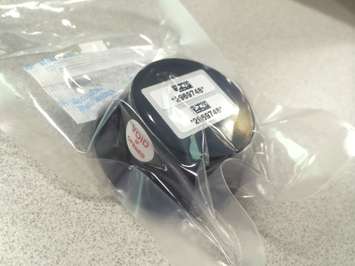
Grey-Bruce residents can either purchase a radon test kit and perform the test themselves or hire a professional to test their home.
More information on radon testing is available at www.takeactiononradon.ca/test-for-radon and on Grey Bruce Public Health’s dedicated Radon webpage.