

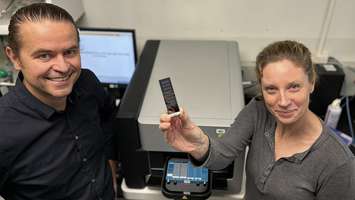
A tool developed by researchers at London Health Sciences Centre (LHSC) and the Lawson Health Research Institute to diagnose rare genetic disorders is getting a funding boost to make it available to the world.
Over the last decade, Dr. Bekim Sadikovic has been spearheading the development of a diagnostic technology called EpiSign.
Using machine learning, EpiSign is the first technology that uses a patient’s epigenome to diagnose genetic disorders.
“Despite advances in genome sequencing, it is estimated that nearly 70% of people with a rare genetic disease are not diagnosed,” says Dr. Sadikovic. “To receive specialized care, you need a specific genetic diagnosis. Without one, you can’t access therapy and, unlike other types of diseases, genetic diseases don't only affect the patient, they affect whole family because they can be inherited.”
Now, thanks to funding of $7,551,693 that includes a Genome Canada Genomic Applications Partnership Program (GAPP) grant and support from Illumina Inc., the EpiSign technology will be implemented in labs at academic institutions in 15 countries around the world.
"This research is a great example of LHSC’s commitment to supporting the world-leading advances in diagnosis of patients with rare diseases,” says Brad Campbell, Corporate Hospital Administrative Executive at LHSC. “The support provided by Genome Canada and Illumina will enable adoption of EpiSign technology and place it at the forefront of patient care globally.”