
A temporary shelter is relaunching in London this winter to offer support to Indigenous people experiencing homelessness.
Atlohsa Family Healing Services announced Friday that it is working with St. Joseph’s Health Care London (SJHCL) and the City of London to operate the Wiigiwaaminaan Winter Response Program.
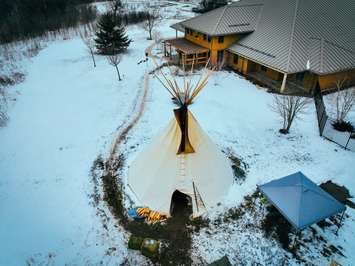
For the second year in a row, the site is being set up at Parkwood Institute, on the corner of Commissioners and Wellington roads, utilizing land backing onto Westminster Ponds. Atlohsa's Director of Community Planning Andrea Jibb said the location will be able to provide culturally appropriate care for Indigenous people struggling to find housing. The shelter site will include a standalone site and a teepee.
"As our relatives have continued to be displaced within their own territories, Atlohsa will continue to advocate for land-based solutions to Indigenous homelessness that are rooted in Indigenous knowledge and strategic partnerships," said Jibb. "Indigenous people have the knowledge and skills required to end Indigenous homelessness."
Jibb said she is thankful for their partnerships with the city and the St. Joseph's Health Care network, that provide the resources needed to support those who need it.
"We believe it is important to work together to find meaningful solutions that address homelessness in our community," said SJHCL President and CEO Roy Butler. "The Parkwood Institute campus serves a multitude of purposes as a place of care, rehabilitation, healing and recovery, a home to our veterans and a proud place to work. This shelter is a welcome addition."
According to statistics highlighted in the Giwetashkad Indigenous Homelessness Strategic Plan, around 30 per cent of London's homeless population is Indigenous, while only 2.6 per cent of the city's total population is made up of Indigenous people. The plan also includes a study among 78 Indigenous-identifying participants who have once, or are currently experiencing homeless. The majority of those surveyed reported having a family conflict or relationship breakdown that led to them losing shelter.
“We have to do whatever it takes to keep marginalized Londoners safer and sheltered as much as possible during harsh winter months, while we work on a long-term collaborative strategy," said Kevin Dickins, London's deputy city manager of social and health development. "The way local Indigenous agencies have come together with hospital partners means more support for more individuals in new and impactful ways."
In the past year, the Wiigiwaaminaan Winter Response Program supported 36 people from various nations. A total of 18 moved to housing, one to treatment and another to a long-term care facility. Another 38 individuals received assistance with applications for rent-geared-to-income (RGI) housing, taxes and other financial or administrative supports.