A critical staff shortage has led to the temporary closure of the London Health Sciences Centre's (LHSC) Epilepsy Monitoring Unit (EMU).
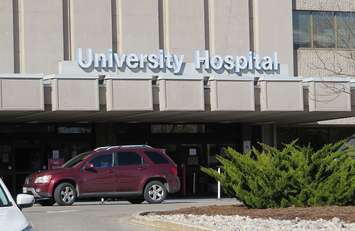
The hospital network confirmed the service disruption to the 11-bed regional program at University Hospital on Friday.
"The Epilepsy Monitoring Unit at LHSC is experiencing short-term staff absences that have interrupted day-to-day business," the hospital said in a brief statement emailed to LondonNewsToday.ca.
Word of the temporary closure came earlier this week when Epileptologist Jorge Burneo, who is part of the program at LHSC, took to Twitter to advise the EMU had arrived at a "critical point."
"After many months dealing with lack of support from the union and the HR office, we have to close for a month," wrote Burneo. "We do apologize to all our patients on the waiting list."
Burneo indicated the unit would reopen in September, but when asked for confirmation of the timeline the LHSC simply stated "we expect this to be short-term."
The hospital did make clear that emergency electroencephalograms (EEGs), a test that detects abnormalities in brain waves or in the electrical activity of the brain, would still be available despite the closure.
"LHSC continues to provide critical care and inpatient EEG services to patients throughout the city and region," the hospital said.
The epilepsy monitoring unit at the north London hospital is the largest in Canada and has treated patients from as far away as Holland, Mexico, Spain, and Australia. Patients admitted to the unit are typically there for diagnosis, classification of seizure type and pre-surgical evaluation.
Health-care staffing shortages have been leading to extended wait times, delays, and temporary closures across the province in recent months. On Thursday, Clinton Public Hospital in Central Huron was forced to close its emergency department. It reopened with reduced hours on Friday. Many health-care professionals dealing with burnout from the COVID-19 pandemic have simply chosen to leave the field and recruiting new people into the occupation has proven difficult.
As a way to try to alleviate the problem, Ontario Health Minister Sylvia Jones last week directed the College of Nurses of Ontario and the College of Physicians and Surgeons of Ontario, to make every effort to speed up registration of internationally educated nurses and doctors.
Meanwhile, health-care professionals and advocates have been calling on the provincial government to repeal Bill 124, legislation that caps wage increases for public sector workers, including nurses and personal support workers, at one per cent a year. They maintain inadequately compensating burned out staff is part of the reason so many have chosen to leave the profession.
The situation in our #epilepsy unit at @LHSCCanada has arrived to a critical point. After many months dealing with lack of support from the union and the HR office, we have to close for a month. We do apologize to all our patients in the waiting list. We will reopen in September.
— Jorge G Burneo (@epileptologo) August 9, 2022