

Researchers from Western University have discovered a cost-efficient method of harnessing a material that has almost seven times more capacity than traditional batteries.
In one of two studies, the researchers attempted to cut down the cost of harnessing phosphorene, which has almost seven times the amount of anode materials that are used in typical lithium-ion batteries.
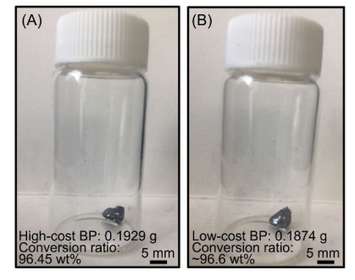
Phosphorene is a two-dimensional material consisting of a single layer of black phosphorus, and black phosphorus that is available commercially costs roughly $1,000 per gram. However, researchers were able to find a new way to produce a low-cost black phosphorus by using low-purity red phosphorus. The new method cuts the cost down by almost 300 per cent to $0.10 per gram. As well, the new material retains an acceptable level of purity and electronic properties.
“The low price makes it possible to realize the future large-scale application of black phosphorus and phosphorene in energy and electronics-related fields, such as nano-photonics, nanoelectronics, optoelectronics, secondary batteries, and electrocatalysts,” said Western's lead researcher, Weihan Li.
In the second study, researchers conducted tests to better understand where oxidization starts on phosphorene. One of the main deterrents to utilizing phosphorene is that it breaks down quickly when it is exposed to air.
The study is the first of its kind to clearly document the oxidization process in detail. The researchers found that phosphorene begins to break down at the thinnest regions first. Afterwards, the degraded regions accelerate the breakdown of adjacent regions.
According to Li, this discovery paves the way for developing strategies to protect phosphorene when it is used in electronics and other devices.
The two studies were conducted by researchers from Western Engineering, Western’s department of chemistry, and Soochow-Western Centre for Synchrotron Radiation Research, which collaborated with the Canadian Light Source (CLS) at the University of Saskatchewan.
The research was funded by the Natural Sciences and Engineering Research Council of Canada.