

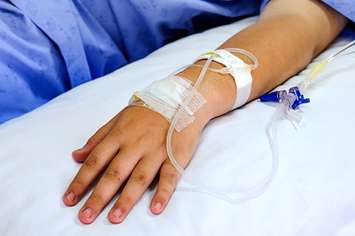
Faced with a shortage of intravenous (IV) sedatives, a group of London-based researchers have been tasked with determining whether inhaled sedatives are just as effective for the most severe COVID-19 patients.
The provincial government has given Lawson Health Research Institute money from the COVID-19 Rapid Research Fund for the study.
"When COVID-19 patients develop severe respiratory failure and need to be ventilated, they require sedation. While IV sedatives are currently used, there is concern about global drug shortages, particularly if there’s a second wave of COVID-19 in the fall,” Dr. Marat Slessarev, Lawson scientist and critical care physician at London Health Sciences Centre, said in a statement. “Even if we have enough ventilators, we won’t be able to ventilate patients without sedatives.”
Inhaled sedatives, also known as volatiles, are typically used in hospital operating rooms to sedate patients during surgery. There have been preliminary studies done on non-COVID patients with severe respiratory failure that suggest they could be safe and even more effective than IV sedatives. The early studies suggested inhaled sedatives can reduce lung inflammation and shorten the duration of ventilation.
Inhaled sedatives are also cheap and readily available, making them an attractive alternative to address the IV sedative shortage, according to researchers.
Approximately 800 patients across Canada and the United States are being recruited for the study. Each of them will either be given IV or inhaled sedatives. Researchers will then determine which method of sedation is most effective by comparing patient outcomes such as length of ventilation.
“This is the largest trial of its kind. If inhaled sedatives can shorten the length of ventilation or improve survival in patients with serve respiratory failure, this could cause a paradigm shift in the way we sedate patients in intensive care units (ICUs) around the world,” added Slessarev, who is co-leading the study with Dr. Angela Jerath from Sunnybrook Health Sciences Centre.
In a sub-study, the same group of researchers will also assess whether one method of sedation results in better cognitive outcomes after treatment.