

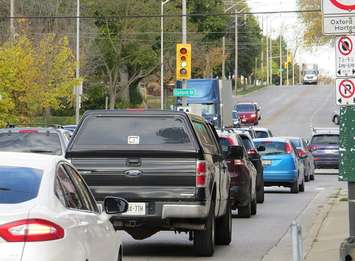
Relief is on the way for frustrated drivers who navigate London streets during rush hour traffic.
City council has approved a plan to upgrade the city's 403 traffic signals to a smart traffic system that uses real-time data to ease congestion by continuously adjusting to changing traffic volumes.
“This is an important first step toward improving London’s traffic signal system for the benefit of all road users,” said Doug MacRae, the city's division manager of roads and transportation. “It’s a critical piece of the transportation management puzzle that will work with other programs and improvements to prepare us for the future.”
The smarter traffic signal system is required for moving forward with rapid transit. It will make for more reliable travel times for all drivers and improve safety. The new technology will allow the city to notify public transit and adjust signal times when traffic backs up due to collisions or regular traffic congestion.
"It will also help future-proof the city’s traffic system, allowing for integration with emerging technologies, such as automated vehicles," according to a statement from city hall.
While the current traffic signal system, which was installed in 2003, has been kept up-to-date, it operates via typical traffic volumes instead of adapting to real-time congestion and traffic situations. Each traffic signal is equipped with a microcomputer to control the operation of the signal.
Work to install the new technology at intersections across the city will be done over the next year.
The improved traffic signals are one of ten transit and transit-supportive projects the city has received provincial and federal funding to complete.