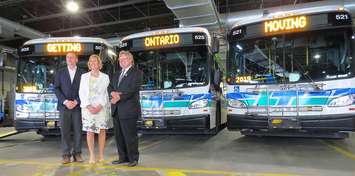
London has received provincial backing to the tune of $103.5 million to move forward with 10 transit projects including the three segments of the now pared down bus rapid transit system.
Ontario's new infrastructure minister Laurie Scott announced the investment at the London Transit Commission headquarters on Highbury Avenue on Tuesday morning.
"London is one of the fastest growing cities in the country and we want to see London continue to serve and grow as a leader in commerce, culture, and innovation. Our government is investing in infrastructure that will keep pace with our growing communities, create jobs, and build for the future," said Scott.
The bulk of the provincial funds - $75.9 million - will go toward the three council-approved legs of the BRT network, which consists of the east London link, the Wellington gateway in the south end, and the downtown loop on King Street and Queens Avenue.
The remaining money from the province will be used for seven other smaller projects including smart traffic signals, intersection improvements and road widening at Oxford Street and Wharncliffe Road, new buses and shelters, and cycling infrastructure.
"These projects will make transportation faster and more efficient. Make our roads safer for all of us who use them. Equally important, these projects will stimulate job growth," said Mayor Ed Holder.
The total estimated cost for the Wellington gateway is nearly $132 million, while the full price of the east London link is just over $120 million and the downtown loop is $28.5 million. London has committed a total of $110 million to the projects, but still needs federal approval and funding before construction can begin.
"The next and final task of the province and city hall as partners is to work with the federal government to secure their funding approval... I am hopeful that before the end of the summer all three levels of government will be able to stand together and report to the residents of our great city mission accomplished -- London is on the move," said Holder.
If the federal government gives the projects the green light, shovels could be in the ground as early as next year.