The Upper Thames River Conservation Authority is asking area residents to offer a helping hand to any turtles they may spot this time of year.
The reptiles have begun their nesting season, which sees them travel across roads and driveways. The trek can prove deadly for turtles as they move far too slow to get out of the way of oncoming vehicles.
Conservation officials are reminding drivers to keep an eye out for the reptiles and when it is safe to do so, help them across the road.
"Placing the turtle back in the nearest wetland area is advised [regardless of the direction it was moving]. If you’re helping a turtle across the road, use care when you lift the animal, keep it low to the ground in case it falls, and ensure your hands and arms are always behind the turtle and away from its head," the conservation authority said in a statement.
Anyone who spots a turtle nesting on their property is also asked not to disturb her. The eggs may take 50 to 90 days to hatch, with the hatchlings of some turtle species staying with the nest until next spring.
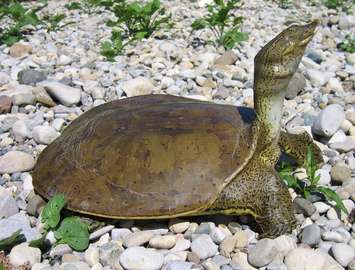
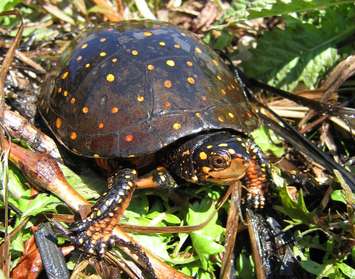
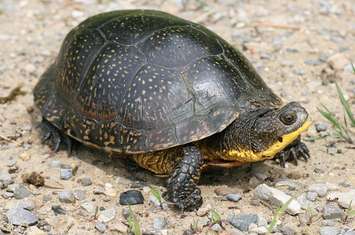
Of Ontario's eight turtle species, seven are listed as "at risk." The spiny softshell turtle, spotted turtle, and Blanding’s turtle are on the endangered and threatened species list.
The spiny softshell is considered a large-sized turtle with a green to brown flat leathery shell, a long neck, and long snorkel-like snout. Female spiny softshells can grow between 35-46 centimetres, while males can be 20-24 centimetres. The spotted turtle is small, growing only 10-12 centimetres and has a black shell with small yellow spots. The Blanding's Turtle is best known for its bright yellow throat and black high-domed shell with yellow flecks. It is considered to be a medium-sized turtle, growing 18-23 centimetres.
Anyone who encounters these three types of turtles is asked to report the sighting to the conservation authority.