
Ontarians will go to the polls this Thursday to elect their provincial government.
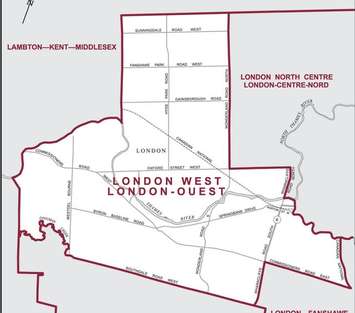
Blackburn News reached out to the candidates in London West to ask questions about some of the top issues in the campaign.
The questions, and their answers, are below.
-
Peggy Sattler, NDP
1) What is the biggest issue in this election?
Change. After decades of cuts and neglect from Conservative and Liberal governments alike to health care and the services we all count on, it is getting harder to build a good life in London West and across Ontario. People are tired of governments that slash essential services while sitting on their hands as the cost of living – for hydro, auto insurance, transit, child care, tuition and housing – has gone through the roof. People are tired of an economy that doesn’t work for them – where costs continue to soar and wages have flatlined. This election is about making sure that Ontarians get the change for better they deserve. Not by trading a bad Liberal government for a worse PC government that will drag us back with more cuts, neglect and privatization. But by electing a New Democratic government that has a vision for bringing change for the better to communities like London West and a fully costed plan to make it happen. That’s why I’m so proud to be part of Andrea Horwath’s NDP. Together, we can put people back at the heart of decisions that impact their lives and make Ontario more affordable and livable for everyone.
2) What is the biggest challenge in Ontario education? Decades of Liberal and Conservative governments have undermined the quality of education and put barriers in front of students. Chronic underfunding that has closed 270 schools and put another 300 on the chopping block, a $15 billion school repair backlog, overcrowded classrooms and inadequate support for kids with special needs have all made it harder for our kids to learn. And young people with incredible skills are trapped by student debt that is stealing their future. We can do better in Ontario. That's why we will re-write the broken education funding formula - which was introduced by Mike Harris' PC government and which is still in use decades later. We will hire more teachers and educational assistants, cap kindergarten classroom sizes at 26 students and fix the rules around education development charges so they can fund the new schools that families need. We will also make a sorely needed $16 billion investment in order to repair crumbling schools. And we will turn student loans into grants so that every student in Ontario can afford to get a post-secondary education.
3) How would your party address the challenges in our health care system, particularly long wait times and hospital overcrowding?
The last PC government in our province shut down 28 hospitals, axed over 7,000 beds and laid off 6,000 nurses. Kathleen Wynne’s Liberals froze hospital operating budgets for four years in a row and forced hospitals to make even deeper cuts to get by. As a result, we're facing a hospital overcrowding crisis across the province – patients are stuck for hours in packed waiting rooms, only to be treated in hallways, without dignity or privacy. In our our riding, London Health Sciences has been forced to cut $141 million from its budget — the equivalent of 488 full-time jobs — while also having to adopt a new “hallway protocol” to manage operating at over 100% capacity for two years. We can do so much better. Andrea Horwath's NDP will end overcrowding and hallway medicine by making sure hospitals are adequately funded and that funding keeps pace with inflation, demographic change and recognizes the unique needs of communities like ours. We will also make much-needed investments to replace or repair rural hospitals. And we will immediately open 2,000 new hospital beds and shorten surgery wait times by allowing hospitals to remove caps that force cancellations and delays.
4) How would your party address the need for job creation in southwestern Ontario?
The economy is changing. Work doesn’t last a lifetime anymore and too many Ontarians are working without basic health and dental benefits. That is why Andrea Horwath and the NDP will implement Universal Pharmacare and Dental Care for Everyone. We also know that skyrocketing hydro bills hurt the competitiveness of our businesses. Only Andrea Horwath and the NDP have a plan to reduce hydro bills by 30 per cent and keep them down in the long-run by making Hydro One public again. We're also making important investments in post-secondary education and workforce development to prepare Ontarians for the in-demand jobs of the innovation economy. This includes a commitment to create 27,000 new paid student work placements during our first term to give university and college students the hands-on work experience they need to succeed in the modern economy. We will end the funding freeze on our universities and colleges and invest in our post-secondary faculty who do the important work of educating our students and preparing them for the world of work. And we will invest in midcareer education and retaining to promote life-long learning, so regardless of your age or career status you can gain skills to succeed in the modern economy. The NDP is committed to making Ontario the premier destination in North America for the next generation of auto investment. We will create a stream within the Jobs and Prosperity Fund to support manufacturing research and development, and we'll create a single window for showcasing opportunities for automotive and manufacturing investment.
5) How would your party bring down hydro prices?
The last PC government opened the door to privatizing Hydro One, and Kathleen Wynne's Liberals finished the job, despite the fact that the people of Ontarians were overwhelmingly clear about wanting to keep it public. Under the Liberals, hydro rates skyrocketed 300%. Then Kathleen Wynne's Liberals put together a scheme to borrow billions in order to artificially keep rates down before the election. Doug Ford and his PCs agree with Wynne and want to keep this scheme in place, which will dump $40 billion worth of new charges onto bills, causing them to soar by another 70% after the election. Andrea Horwath and the NDP are the only ones with a plan to make hydro public. We'll reduce hydro rates by 30%, bring Hydro One back into public hands and take private profits off your bill. We'll fix the oversupply in our system and aggressively renegotiate bad contracts so that we can end the ridiculous practice of selling power across the border at a loss. We'll also axe unfair rural delivery charges and mandatory time-of-use charges, because we know families and businesses can't choose when they need electricity. Hydro isn't a luxury. Unlike PCs and Liberals, an NDP government won't treat it like one.
-
Pamela Reid, Green Party
1. What is the biggest issue in this election?
Vision, Direction, Leadership and HYDRO! The world is moving fast. The systems that once held are regularly volatile now. Employment is precarious, education for the right fields is precarious. Our environment is precarious. Healthcare, when properly funded, is outstanding, but needs improvements. Prevention and health promotion both save significant amounts of money and lives. Our ability to care for each other is convoluted. The political system is fractured and is in desperate need of repair. Our mainstream parties are asking nothing from its citizens. Ontario is barely getting by every 4 years, forget a vision for a generation. Honesty and principles are missing. And the main 3 parties are beholden to corporate and union interests. The citizen is lost in the mix. We are not solely consumers. Ontario has disconnected ways of gauging people's happiness or wellness. Our GDP does not measure things of quality.
2. What is the biggest challenge in Ontario education?
For the GPO, it is several aspects simultaneously. We have great duplicity having two school boards. Enrollment is low in some areas, causing school closures and mass bussing. Buildings are being torn down. Teachers are having to teach to a EQAO standard whose goals are a measurement that is abstract and doesn't serve children. Classrooms are too full. Special needs students are not getting adequate supports. The lack of mental health supports for children is severely lacking. Children have less access to nature, food resiliency skills, playtime, art, music, and non-competitive sport. Educating for the future economy, for happiness, wellness, and cultural diversity all need supports and investments.
3. How would your party address the challenges in our health care system, particularly long wait times and hospital overcrowding?
The Green Party of Ontario health platform is built on prevention, decentralization, addressing poverty, housing, mental health and addictions, dental care, and funded pharmacare across the life course. Greens have offered this in our platforms since 2003. By improving funding to Telehealth, and Tele(Mental)health, proper care can be diverted away from the Emergency Rooms. We will fund more nurses, nurse-practitioners, PSW's (with better labour and pay standards), community care clinics, improved rural medicine for Isolated communities, and cultural training for all Public Health Employees to honour the Truth and Reconcilliation Commission. In London, the St. Joseph's Urgent Care model works really well. However, it is only open 8:30-4:30 weekdays. The Green Party of Ontario will create a decentralized care model for less urgent cases, which can be triaged through Telehealth and our EMS.
4. How would your party address the need for job creation in southwestern Ontario?
The Green Party of Ontario will create incentives for the cleantech and renewable energy sector to locate here. We will stop subsidizing businesses that pollute and will incentivize manufacturing that serves a carbon-neutral economy. We are reducing taxes for small businesses with earnings less than $5 million annually, so hiring people is more affordable given our commitment to a living wage. We support value-added businesses, social entrepreneurs, and a Basic Income Guarantee to support entrepreneurs and those studying to prepare for a 21st-century Green economy. We support farmers, and their work to bring food to our tables. And we will provide incentives for all businesses to create a cradle to cradle economy - one where there is no waste. All materials need to be reclaimed, recycled and diverted from our overflowing garbage heaps. The investment in high-performance rail, to move people and goods, faster, and cleaner will open up the Southwest corridor to the U.S. and toward Quebec. Investments in rail will position Ontario as a leader.
5. How would your party bring down hydro prices?
The Green Party of Ontario will move away from nuclear. Pickering's best before date is this August, 2018. We will decommission it, creating 16,000 jobs, and switching to hydro-electric power from Quebec and Manitoba. We will invest these savings into upgrading transmission lines. Water power costs on average $0.05-.06/kwh, versus $0.16-17/kwh for nuclear. When Bruce and Darlington are at the end of their operations, we will decommission them too. We have no secure, long-term solution for the nuclear waste they create. Ontario can become a leader in decommissioning nuclear, bringing our expertise to the world. Greens will invest in decentralized power projects, leading Ontario on a path toward 100% renewable energy. Energy conservation strategies account for less than 2% of the budget, and can greatly increase efficiencies and saved money.
-
Tracey Pringle, Freedom Party
1. What is the biggest issue in this election?
Spending. As Freedom Party leader Paul McKeever says: "No New Spending." All of the other parties are falling over each other to outspend the next with new proposals and spending promises. Every one of those promises represents money that will be taken from the taxpayer, not given to the taxpayer. Already, provincial deficits and debts demonstrate that proposing new spending on new programs is irresponsible. Locally, the biggest spending issues is Bus Rapid Transit (BRT). Freedom Party opposes BRT plans and would not provide provincial funding for such plans.
2. What is the biggest challenge in Ontario education?
The Quality of education. There is a great need for more instructional education which has been increasingly replaced by what has been termed as 'experiential' - 'whole language' - 'child-centered' etc. education. This approach to education has produced steadily deteriorating education standards and results. Illiteracy continues to be on the increase, despite increased spending on education. University environments have become intolerant of any diversity of opinion and ideas and tolerant of violent and disruptive actitivity preventing a free exchange of ideas and opinions. Governments should be committed to the protection of freedom of speech, particularly on university campuses where that freedom is being most threatened.
3. How would your party address the challenges in our health care system, particularly long wait times and hospital overcrowding?
Wait times and hospital crowding are the inevitable consequence of health care rationing. Rationing is the consequence of demand exceeding supply. Both the supply of doctors/nurses should be increased and the demand on taxpayers to fund the health care system must be decreased. Freedom Party would reverse the decision of provincial first ministers to limit the number of doctors in the country, and would also legalize private health insurance and other methods of funding health care beyond the 'single payer' model (the Government being the single payer) that is the primary cause of the symptoms.
4. How would your party address the need for job creation in southwestern Ontario?
All of the other political parties seem to believe that it is their job to 'manage' the economy. Steadily increasing provincial debt and spending away Ontario's future is no way to 'create jobs' today. Freedom Party believes that government has no business being in business. Government must once again become the 'referee' in the game and not a player. For markets to function, which is necessary for the creation of jobs and wealth, they must be free.- free of political intervention, ever increasing taxes, and artificial market restrictions. It all begins with No New Spending.
5. How would your party bring down hydro prices?
The government's philosophy of "power at cost" (which maximizes costs to consumers) must be replaced by the philosophy of "power at price" (which minimizes costs to consumers). We must end the government monopoly on electricity supply by permitting competition in the supply of electricity. End the government's price controls. Pull the plug on solar and wind projects that produce electricity costing many times the market price. Competition must become the operative principle in the pricing of electricity.
-
Brad Harness, Consensus Ontario Party
1. What is the biggest issue in this election?
Party politics is the big issue, how poorly it serves voters. Most voters are fed up with partisan politics and half no longer vote. Our solution is to get rid of all parties including our own and replace it with a system of only Independent MPPs representing their ridings
2. What is the biggest challenge in Ontario education?
(The) Biggest challenge in Ontario education is to produce literate and motivated workers for the Ontario economy. A Back to Basics curriculum with more emphasis on rote learning in the maths and in language skills is needed
3. How would your party address the challenges in our health care system, particularly long wait times and hospital overcrowding?
Health care's top issues to be fixed are both at the entry point for unwell Ontarians, namely a lack of family doctors and overly long wait times in Emergency Rooms. Once admitted for care, the shortage of nurses is apparent and needs resolution. Our solution is to increase funding of all ERs, and to initiate a new doctor and nurse training programme based on that of the Canadian Forces, with trainee doctors and nurses hired and paid through their education in return for an equal number of years of service wherever they are needed in Ontario.
4. How would your party address the need for job creation in southwestern Ontario?
Job creation is an issue in London and Windsor but less so outside of these two bug centres where the rural depopulation underway for many years has resulted in few workers to hire. In rural areas workers are needed and we see an immigrant settlement scheme to spread around the benefits of immigration as the key. In the major centres as well as across Ontario job creation should be tied to tax credits fir businesses who create long-term full-time jobs
5. How would your party bring down hydro prices?
Consensus Ontario was the first party calling for a single flat rate for electricity. We feel this should be set at the actual cost to produce the electricity, likely in the 9 cent KwH range. We see a movie x of generating assets as sensible and future growth should be on the Quebec model, namely hydro. Finally we think all urban centres should generate their own power.... This will mean much shorter transmission lines and far less electricity loss. Further the government should invest in industrial scale electricity storage to reduce losses. Finally all new buildings should be required to generate their own power so as to add no new demands in the grid.
-
Jacques Boudreau, Libertarian Party
1. What is the biggest issue in this election?
The provincial debt ($325 billion) and the health care unfunded liabilities ($360 billion) are the biggest issue by far. The unfunded liability is the difference between the value of the future health care costs and the future taxes collected to pay for them. Since the future costs will exceed the future taxes, prior governments should have accumulated a reserve of $360 billion to make up the shortfall but, of course, they didn’t. The outcome is that the government is currently rationing services in order to try to keep health care cost down. If people think that wait times are long now, they have seen nothing yet as the worst of the crisis will happen during the 2030 to 2050 period. This is a ticking time bomb that no other party is willing to address.
2. What is the biggest challenge in Ontario education?
Undoubtedly, the terrible government school system that produces unacceptable results. Consider that only 50% (1 in 2) of children in grade 6 can meet the (low) minimum standard for mathematics or that 1 in 5 kid cannot pass the minimum standard for literacy in grade 10. Only 44% of children in the grade 10 applied stream can do so. People should be allowed to take their kids out of a system that produces such lousy results but currently those people would have to pay twice since the government doesn’t provide a refund to those who object to the poor quality education their children receive. The Ontario Libertarian Party would end this disgraceful government practice and allow parents to control their education taxes and spend them on the school of their choice.
3. How would your party address the challenges in our health care system, particularly long wait times and hospital overcrowding?
As mentioned above, prior governments have failed to fund the current and future demands for health services such that the shortfall is too large to continue as we do. Canada has one of the most expensive health care systems in the world and yet ranks either last or second last on a variety of metrics when compared to 10 other advanced nations. Strikingly, every single one of those nations allows a parallel private medical care system to operate alongside the public one. The Ontario Libertarian Party would allow such a parallel system to operate because it would reduce prices, wait times and increase efficiencies as it has done in other countries. The Ministry of Health regularly calls physicians ordering them to cease doing procedures and operations for limited periods of time. This creates an artificial cap on the supply of services, leading up to longer wait times. It’s one thing for the government to restrict services but it is morally reprehensible to prevent people from seeking an alternative through private means. This must stop.
4. How would your party address the need for job creation in south western Ontario?
Unfortunately, this question perpetuates the myth that we need the government to get involved in job creation. We don’t. In fact, the larger the government is and the more central planning we have, the worse the economic performance is. The golden age of economic growth in this province was in the late 1800s when the government was a tiny fraction of what it is today. On the other hand, today there are a staggering 380,000 regulations in the province, many of which do nothing but add to the burden of enterprises. What the government should do is reduce its direct and indirect involvement in the economy. The Ontario Libertarian Party would reduce electricity rates, the number of regulations, taxes, and red tape. Furthermore, we would eliminate all forms of corporate welfare and the minimum wage and create a stable environment for long term business decisions to be made. Entrepreneurs, not the government, are the job producers. Unfortunately the latter is making it very difficult for the former to flourish.
5. How would your party bring down hydro rates?
The Ontario Libertarian Party would abolish the Green Energy Act and cancel all contracts with so-called green energy producers. We would immediately allow for competition to operate so as to provide the people of Ontario with choices. As repeatedly demonstrated, competitions decrease prices while improving services. The government monopoly on the generations and transmission of electricity has done exactly the opposite: prices have gone up a lot while the quality of services has gone down. It’s about time that we end this terrible practice.
--
At the time of publishing, PC candidate Andrew Lawton, Liberal candidate Jonathan Hughes, and Communist candidate Micheal Lewis had not responded to emailed questions. In the event they do respond, this post will be updated.