
Teresa Armstrong: (NDP)
1. what is the biggest issue in this election?
Based on conversations I have had at the doorstep, this election is about change. Ontarians are working hard, but finding it harder and harder to get ahead. Between hydro prices, gas prices, the housing and rental markets and everything in between, I think the biggest issue in 2018 is finding the right change that will help make life easier. People deserve a government that puts them first and works for everyone, not just some. We need Change for the Better in this election. Ontario needs a leader people can trust and a party with a platform that will actually get good things done. The good news is that voters have an alternative in this election, and they can choose to vote for the NDP.
2. what is the biggest challenge in Ontario education?
The most important improvement we can make to our education system in Ontario is improving funding models to ensure adequate support for our teachers and students. Schools are the heart of our communities. The NDP will spend $16 billion to repair crumbling schools and we will overhaul the education funding formula. We will keep local schools in our community open. The underfunding of education has been widespread enough that, since 2011, the Liberal government has closed 270 schools and put another 300 schools on the chopping block. These schools are an essential part of their communities. We need a provincial government that understands the real value of a school and providing our children with a rich education. We want to hire more teachers and educational assistants and cap kindergarten classes at 26 students. The NDP has a plan that will give our kids the resources in the classroom they need to succeed in the life.
3. how would your party address the challenges in our health care system, particularly long wait times and hospital overcrowding?
Fixing health care is at the heart of the NDP’s Change for the Better Plan.
First and foremost we want to address the issue directly by ending the frozen funding levels for area hospitals. The NDP would increase hospital funding by 5.3% to address frozen budgets that did not even allow for inflationary increases. We have also announced $916 million in additional investment, which includes opening 2,000 new hospital beds immediately.
Secondly, we want to improve our health care system by providing every Ontarians access to preventative and overall health influencers. Every 3 minutes someone visits an emergency room in Ontario for assistance with an oral health related concern. Our universal dental care plan that will help alleviate some of that strain. We also have a pharmacare plan that will help every Ontarian, at any age, be healthier through access to commonly needed medications. When people of every age have access to their medications; it means less strain on their pocket book, their health, and the on the rest of the health care system as well.
4. How would your party address the need for job creation in southwestern Ontario?
We want to give young people a head start in the job market and give companies incentives to provide young people the opportunities they need to succeed. This means creating 27,000 new paid co-op and internship placements for post-secondary students to get real-life work experience.
Through the Jobs and Prosperity Fund, we will double Ontario’s Career Kick-Start program so Ontario’s colleges and universities can create new work-integrated learning opportunities.
We also plan on supporting investments in the auto and manufacturing industries, and resource development. We need to ensure companies know if they are looking to hire in Ontario we have the skilled workforce they need for a successful operation. To promote having the skilled workforce we need to attract business, we will invest $57 million to focus on educational supports and apprenticeships to create opportunities in the skilled trades
5. How would your party bring down hydro prices?
The NDP is the only party that will bring Hydro One back into public hands. We believe this is the only way to ensure accountability, transparency and oversight and fix the problems we have seen. We are committed to implementing changes that will result in a 30% decrease in hydro costs. We will use the dividends from Hydro One profits to buy back the shares, so it won’t cost Ontarians any additional money. Then we can ensure that the utility is run in the public interest, not for private profit. ---------
Stephen Campbell: (None of the Above Party)
1. what is the biggest issue in this election?
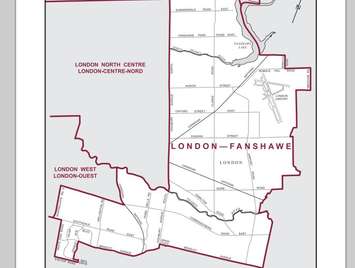
The biggest issue should be finding a party that can balance a budget and provide adequate services. But people are more concerned with voting for a party that can get rid of a party that they do not like with another party that they do not like just so they can get rid of the Liberals. My recommendation is to VOTE for someone that will listen to you. My one and only Campaign promise. I would like to draft a bill to cut mpps pay by 5%. In the Rogers debate I mentioned that if you cut every sunshine lister by 5% you would balance the budget based on the 2014 sunshine list. Now like you I do not trust the other parties Blue Orange Red or Green. They would vote this down. If they vote this down. If I was elected for the London-Fanshawe(053) district I will take $5000 from my salary and give it back to the people of London-Fanshawe it will be like a lottery of anyone that votes in the London-Fanshawe District. You can even vote for another party. As long as you are on the strike off list in the 2018 election for the London-Fanshawe district. I am pretty sure there is nothing against this that I could find in any legislation. So as long as it is legal I will give the money back to the district every year I am in office that we do not get a pay cut. I was thinking $500 increments back to the people of the district that vote. Again with the website I am developing we could vote on the increments together. In 2014 50,000 people did not vote in the London-Fanshawe district. The top candidate only received 17,903 votes. That means all non voters could vote in any candidate of their choosing.
2. what is the biggest challenge in Ontario education? Currently, EQAO scores are low and Math scores are low. I would recommend have consultations with teachers on how we could improve this. They know their jobs best.
3. how would your party address the challenges in our health care system, particularly long wait times and hospital overcrowding? Our Party does not dictate polices. London is currently underfunded for wait times. Not only the wait times in our hospitals are bad but the Middlesex-London Paramedic Services are made to wait with patients in hallways but emergency services in jeopardy for people. Obviously the majority party would have to apply more funding to health care in this province with Balancing the Budget.
4. how would your party address the need for job creation in southwestern Ontario? Somehow we need to bring down Hydro Prices, attract Companies back to Ontario. With yesterdays failed tariffs at the Federal Level and the NAFTA agreement not in place this is going to be very hard.
5. how would your party bring down hydro prices? Our Party does not dictate polices. We would have to review all hydro contracts and take the auditor generals advice would be a good start. We have a surplus of power and need to find a way to stop over producing power we do not need. -------------------
Lisa Carriere: (Green Party)
I am an herbalist and complimentary health care practitioner. I am also now a politician who believes in service above self and serving the people of London-Fanshawe and Ontario tirelessly! I was born in Woodstock, ON, raised in the arctic and have spent the last 29 years living in London.
1. The biggest issue in this election, in my opinion, is the great desire for change & the uncertainty surrounding what the change everyone wants so badly is!
I'd also like to take the opportunity to state that the biggest issue, in my own opinion, is actually climate change and the lack of willingness of anyone to talk about it.
Jobs and taking care of people, addressing the great uncertainty regarding the future are all issues I feel the big 3 status quo parties are trying to connect to people by acknowledging. I also strongly feel that they are all busy offering band aid solutions to try and appease voters and sway them towards their parties. I do not feel that any of these solutions will give us the future that we need to prosper.
2. The biggest issues in Ontario education are that we must recognize that education doesn’t stop at 18 or 25. The changing nature of work will require many of us to upgrade skills or learn new ones throughout our lives. Despite the current government's attempts to make continuing education more accessible, it remains out of reach for many. We must acknowledge that the landscape has indeed changed and we need to support people in the 21st century by offering new solutions instead of being focused on what might have worked or not worked in the past. The biggest challenge is getting funding to students, of all ages, at all stages of their lives.
3. In regards to long wait times, overcrowding & challenges to our health care system, the Green Party of Ontario believes in a publicly funded health care system accountable to the public, focused on people’s needs.
Our vision seeks to make sure that access to health care is available when you need it, that it supports keeping us in good health, and that public health policy development considers the social determinants of health.
In short, we believe in a people-centred approach to health.
We take a comprehensive view of health care by using smart investments to improve our current system, making health promotion and early intervention a top priority, improving the care available to Ontario’s changing demographics and ensuring sufficient resources are allocated to mental health.
The good news is that there are solutions for the way forward. The real issue is that these solutions require political commitment and thinking that extends beyond the four-year election cycle. This is the type of leadership the Green Party is committed to providing.
our plan to support the health care system is as follows -
Support hospitals and health care facilities
Reduce overcrowding in hospitals with a system wide strategy to better use existing resources in home care, long-term care, nurse-led clinics, primary care and community care.
Develop a health care capacity plan to reopen hospital beds, operating rooms and services based on the population’s need for care.
Create an integrated funding structure for health care, based on quality outcomes that will ensure that the best care is provided by the most appropriate and cost effective provider.
Expand the number of and access to Nurse Practitioner led clinics in all parts of the province.
Increase the number of Nurse Practitioners in long-term care, mental health care and acute care facilities to improve patient care and outcomes.
Increase funding for Local Health Integration Networks (LHINs) that are struggling to fulfill their downloaded mandate from the Ministry of Health and Long-Term Care and provide dedicated funds that ensure enhanced collaboration with various partners, including District Social Services Administration Boards (DSSABs), to enhance the integration and delivery of public services.
Improve primary care and community health care Commit to comprehensive primary health care as the foundation of the health system so that every person in Ontario has timely access to a primary health care provider and to ensure that health promotion, illness prevention and community well-being are at the centre of our health system.
Provide every Ontarian with electronic access to their personal health records.
Provide insurance claimants with clear, fair and thorough guidelines on how to proceed with their claims and ensure the accountability of insurers to their clients through an independent and objective regulatory process to ensure fair evaluation, support and compensation for victims of injuries.
Expand access to multiservice and integrated primary care models such as family health teams, nurse-led clinics, community care centres, and Indigenous health access centres.
Mandate training for primary health care practitioners on the health care needs of trans and gender-diverse people.
Support increased midwifery training and birthing centres and ensure accessibility of obstetricians in case of birth complications at birthing centres.
Improve the level of care in residential homes for people with severe disabilities, including increased funding and strict guidelines for proper care, and more vigilant auditing and inspections.
Support and fund programs for children of all ages with autism.
Create more meaningful day programs for all levels of special needs individuals after graduating from high school.
Support health care providers Prioritize health care investment in frontline services rather than administration.
Ensure all care providers are working at their full scope of practice.
Provide equal pay for equal work across all health care sectors.
Provide all health care professionals with mental health and addictions training.
Designate the Ontario Personal Support Worker Association as the self-governing regulatory body of personal support workers in Ontario, to increase the accountability of those who provide care to vulnerable populations, and to ensure reasonable working conditions for personal support workers.
4. In regards to job creation, we as Greens have our eye on creating the jobs of the future now instead of clinging to the past.
Cleantech is growing, generating well-paid jobs with good middle class incomes.
Jobs to install solar shingles, retrofit our homes and businesses to lower our energy bills and protect our water.
Jobs in clean innovation, waste reduction, advanced manufacturing, systems management and design.
Jobs in caring for people, local food, arts and culture.
The future economy is here and we’re ready to make the transition.
How will we create jobs in the new clean economy? Ontario must stop subsidizing yesterday’s jobs.
We need to skate to where the puck is going, not where it is.
The winners in the new economy will be those who embrace innovation and jobs in the clean economy.
This is the best way to create jobs and prosperity for the 21st century.
Today, more Canadians work in clean energy than in the tar sands.
Globally, the clean economy is a $6 trillion opportunity that is only trending upward.
That’s a lot of opportunity for Ontario businesses to generate jobs and prosperity.
As Your Green MPP, I will build a bridge to the clean economy. Steering today’s and tomorrow’s businesses and workers towards good sustainable jobs.
5. How will we bring down hydro prices?
We are the only party that has a leader that has made a clear, definitive commitment to making Ontario 100% renewable by 2050.
We are deeply concerned that climate change is not being mentioned by the other parties in this election. Climate change is real and by ignoring it, the status quo parties are doing damage to our environment and to our economy. Greens will seize opportunities in the $6 trillion dollar clean economy to create jobs and prosperity.
Our immediate plan to make hydro more affordable is as follows
Strategy: Develop a Clean and Affordable Electricity System
Our electricity bills keep going up - and there’s no relief in sight.
Ontario’s current electricity system is unsustainable. Yet instead of real change, the only solution offered by the status quo parties is to borrow billions of dollars - billions that we and our children will have to pay back - to maintain the crumbling system we have.
The status quo parties want to increase your electricity bill and borrow billions to rebuild outdated nuclear plants. They refuse to do an independent public review of the costs of power sources before spending billions.
No nuclear project in Ontario’s history has delivered on budget or on time. Nuclear power plants use outdated technology and need of constant, expensive maintenance. Nuclear locks us into an old, centralized system that limits opportunities for taking advantage of new low cost opportunities.
A better plan is to purchase low cost water power instead of high cost nuclear power. We can reduce demand for new power sources by helping people save energy and money. And we can tap into the clean energy technology to modernize and economize our system.
Ontario can win big by becoming a leader in the clean energy economy. We can create jobs and make our energy system work for people, not big energy.
Without this bold vision for change, our electricity bills will keep rising.
--------------
Lawvin Hadisi: (Liberal Party)
1. What is the biggest issue in this election? I am seeing an increasing amount of people who are concerned about the healthcare system in Ontario and more specifically in London. Whether it's children who are concerned about their aging parents, seniors who need access to healthcare or families in search of a family doctor - Ontarians deserve access to the highest-quality health care when and where they need it. Our healthcare system is something that we take great pride in as Canadians. The Ontario Liberal Party shares the same passion as Ontario citizens for bettering our healthcare system and is committed to ensuring it is always a priority.
2. What is the biggest challenge in Ontario education? Due to the Ontario Liberal Party's investments, Ontario's education system is one of the best in the world. We have increased funding for education every year we've been in office. It's thanks to these investments that our high school graduation rate has risen to 86.5%, up 18%.
But we know there is more work to be done. We have heard from families that they need more support when it comes to Special Education for their children.
We know that providing the right supports as early as possible can significantly improve a child's development, and we understand how passionate parents are when they advocate for their kids. That is why we have taken significant action to improve access to Autism services in Ontario. We're investing an additional $538M to ensure that all children, regardless of age, receive services based on their specific needs. We are also creating 16,000 new spaces, dramatically reducing wait times, delivering diagnosis earlier so children can access services sooner and making it easier to transition into school and stay there full time.
Our investments, which are based on expert advice, are providing services earlier, reducing wait lists, and improving outcomes. And you have my commitment that we will continue to take action by making families a priority.
3. How would your party address the challenges in our health care system, particularly long wait times and hospital overcrowding?
Since 2003, we've increased our investments in health care each and every year, allowing us to treat more patients, provide better care and reduce wait times to some of the shortest in the country. Last year, we invested nearly half-a-billion in Ontario hospitals. As a result, both the Fraser Institute and Wait Time Alliance have consistently ranked Ontario as having some of the shortest wait times in Canada.
With our 2018 budget, we are making a deliberate choice to invest in care for the people of Ontario by investing more in healthcare -in hospitals, home care, mental health, and long-term care. With the 2018 Budget, we are making an additional investment of $5 billion in the health care system over the next three years to reduce wait times, increase access to care and to enhance the patient experience. This includes over $822 million in funding increases to Ontario hospitals and $2.1 billion over four years for mental health and addictions to deliver more accessible, integrated care.
Ontario Liberals have also led the largest expansion in medicare in a generation – expanding it first to children and youth under the age of 25, and, in 2019, this will be expanded to seniors as well. We're moving closer to the goal of pharmacare for all people in Ontario.
4. How would your party address the need for job creation in southwestern Ontario?
We have created nearly 820,000 new jobs since the recession, and nearly 400,000 jobs under this Premier. Ontario’s unemployment rate is at its lowest level in 17 years. For the past three years Ontario led all G7 nations when it came to economic growth. Private-sector economists are forecasting that Ontario's growth will outpace the rest of the country over the next two years.
We know there is more work to be done in creating more jobs and strenghtening our economy. That is why we have focused on programs like the Jobs and Prosperity Fund (JPF) and the Southwestern Ontario Development Fund (SWODF).
Through JPF, businesses, business associations, and entrepreneurs can get funding for projects to enhance productivity and help them compete in the global marketplace. Since January 2013, Ontario has committed over $950 million in projects administered under this fund, leveraging over $12 billion in total investment. This is helping to create and retain approximately 55,000 jobs. In London, one example is the $7 million that is being invested in the Dr.Oetker plant to create approximately 100 more jobs, positively impacting our community. SWODF, is a fund designed to help businesses create new jobs, and invest in new technologies, equipment or skills training for workers. It will also support economic development projects that will attract or retain investments in Ontario-based industries and communities. Since January 2013, the fund has committed support of over $180 million, helping to create and retain around 49,000 jobs and leveraging over $2 billion in total investments.
We are also investing $411M over three years to continue building Ontario’s Talent Advantage so Ontario workers continue to be the most sought after in the world.
5. How would your party bring down hydro prices? Over the last several years people told us that electricity prices had increased too much, and too quickly. While these increases were due to investments made to clean up the dirty, unreliable system we inherited we knew we had to take action. We eliminated coal, and now our electricity is 96% emissions free and we have a generation of children who have never experienced smog days. In response to the increase of hydro prices we introduced the Fair Hydro Plan which has made energy bills 25% lower on average for families, small businesses and farms, and low-income families and those in rural and remote areas are seeing decreases as high as 40-50%. These figures don’t include savings from our Ontario Electricity Support Program, meaning qualifying families are paying even less. We acted when we heard from families who said they can't handle the sharp increases that were taking place in previous years.
-
Progressive Conservative candidate Eric Weniger did not respond to the questions.