A London researcher has found the most dominant HIV strain worldwide is also the slowest to progress to AIDS.
The finding comes from a 15-year international study of roughly 300 women newly infected with HIV in Uganda and Zimbabwe.
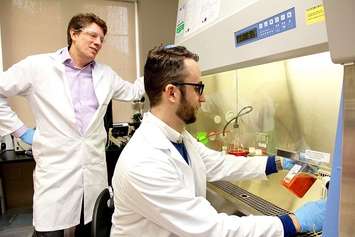
Eric Arts, chair of the Department of Microbiology & Immunology at Western University's Schulich School of Medicine & Dentistry, was the co-leader of the research team that made the discovery. They found that the women infected with a specific HIV-1 strain, called subtype C progressed very slowly to AIDS due to the poor replication of the virus.
"Understanding that HIV subtype C is 'wimpy' is a difficult proposition because seeing it replicate poorly in tissue culture flasks does not mean that it will establish a slower infection in an infected individual. But that's exactly what happens," says Arts. "Based on our study, it is very clear that patients infected with HIV subtype C progress slower to full-blown AIDS."
HIV subtype C is predominantly found in Southern Africa, Eastern Africa, India, Nepal, and parts of Brazil and China.
Arts, who is also the Tier 1 Canada Research Chair in HIV Pathogenesis and Viral Control, says knowing the virulence of the different HIV subtypes could dramatically impact how the virus is treated with drugs.
"If we know a patient progresses very slow to disease and the virus is having a minimal impact on the immune system then all of the devastating consequences of delaying treatment, as we saw in North America, may not be as pronounced in patients infected with HIV subtype C," says Arts. "When we are looking at billions and billions of dollars a year to treat the global epidemic, we might have to look at it as who needs treatment immediately and who can be delayed. That's very controversial but it's something that we have to consider for further study."
Since the 1970s, an estimated 35-million people have died from HIV/AIDS.
The findings of the study were published Thursday by the journal EBioMedicine.