
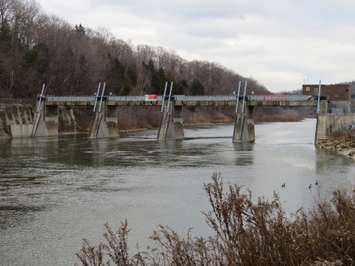
A city councillor says he's as frustrated as any other Londoner that a decision on the fate of Springbank Dam can't be made quicker.
But Councillor Josh Morgan stresses the city has to follow the proper procedures before a decision can be made to decommission or repair the dam.
"There's not much we can do to speed up the process at this point," says Morgan. "We can't just take the dam apart without engaging in the proper processes and permits required by the provincial and federal regulators that we have to follow."
On Tuesday, the civic works committee voted in favour of the One River plan, a combined environmental assessment (EA) of the dam and Back to the River. The joint EA wouldn't be completed until January 2018, meaning Londoners could have to wait another two years for a final decision on the dam's future.
Morgan says the joint EA makes financial sense as it will save the city $300,000.
"That doesn't mean I'm for keeping the Springbank Dam. There will be an important decision point on that," says Morgan. "I don't think recreational dams on rivers are a very good use of infrastructure. I would need to be convinced otherwise, otherwise I expect to be voting to decommission the dam at some point in the process."
Morgan says he understands some Londoners are becoming impatient but it's more important council make the right decision, not a speedy one.
"This is a decision that we will make, particularly in reference to both projects, that will impact the shape of the river and the city indefinitely into the future. It's taking a little bit of time to make sure we get it right, that we engage with Londoners properly," says Morgan. "Although there are a number of people out there who have made their decision on this and would like to see it executed, the decision of the city has to be the right one and has to follow the right process and that isn't always the quickest process.
Springbank Dam has been inoperable since 2006 when work on a multi-million dollar upgrade began. During testing of the upgrade in 2008, the dam malfunctioned. The malfunction prompted the city to launch a $5-million lawsuit against the contractors in April 2009. The lawsuit was settled in the fall of 2015 with the city receiving $3.775-million. With the lawsuit settled the city resumed debate on the dam's future.
More than 100 Londoners attended a public meeting on the issue in March. First Nations communities, environmental groups, and the Thames River Anglers Association have all argued the health of the river has improved since the dam broke. While a handful of recreational groups, including the London Rowing Club, are calling for the dam to be repaired so they can resume activities in the Thames.
The joint EA goes to council for final approval next week.