

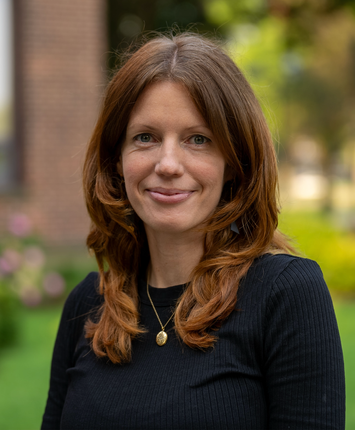
A law professor at the University of Windsor is calling for a ban on Artificial Intelligence (AI) in courts.
Kristen Thomasen, an Associate Law Professor at the University of Windsor, told CK News Today that AI isn't the best way to address judge and staff shortages, along with other challenges in the legal system. She noted that adding resources is the proper way to deal with the staffing problem.
"Why are we using AI in the court system, when probably in a lot of circumstances what we need are maybe more judges, better funding for legal aid, more structural support for the court system so there isn't this sense of a justice crisis because of low resources?" asked Professor Thomasen.
Thomasen said fabricated information generated by AI can also lead to wrongful convictions, adding that it's unlikely a guilty person would walk away free due to a miscarriage of justice.
"Definitely reason to be concerned for any lawyers who are using AI as a research source because there have been instances where cases that are not real or stand for something totally different have been cited, almost like too much trust in the system," the professor noted.
Professor Thomasen also hopes AI never replaces decisions and rulings made by human judges, adding that strong human oversight and a just outcome are essential.
"Of course, getting the outcome right, figuring out what is just in a given case, is absolutely crucial and should be the biggest concern for anybody," Thomasen said.
AI use is evolving in courts to increase efficiency and access to justice. However, the Canadian legal community has emphasized that it must be used as a supplementary tool rather than a replacement for human judgment.
AI also has the potential to compromise justice in Canada if misused in legal proceedings by using fake case law and biases generated by ChatGPT.
Several courts have implemented rules requiring lawyers to disclose when they have used AI to prepare documents and verify their accuracy.
Penalties for lawyers who fail to verify their work and present fake case law are also under consideration. They include fines, paying court costs, and perhaps even being disbarred.
Trevor Guy, Special Counsel and Chief Communications Officer for the Office of the Chief Justice and the Ontario Superior Court of Justice, told CK News Today that lessons are being learned and revisions to the rules and guidelines will follow.
He said only a handful of cases have been fabricated across Canada, adding that an Alberta lawyer is currently facing contempt of court charges as a result.