
Trailblazer Mary Ann Shadd of Chatham has been honoured with a new Black History Month stamp.
Shadd was an abolitionist, educator, writer, and lawyer and was also the first Black woman in North America to publish and edit a newspaper.
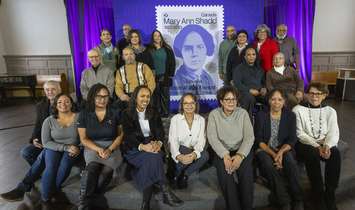
Shadd's stamp was unveiled by Canada Post at an event in Chatham on Tuesday, where she spent most of her years while living in Canada.
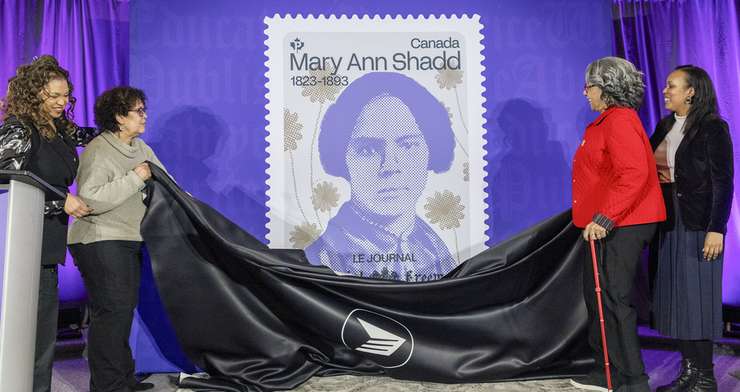
Descendants of Shadd, including Adrienne Shadd, Marishana Mabusela, Brenda Shadd, and Canada Post Director of Equity, Diversity and Inclusion, Brandy Ryan were on hand at The Kent in downtown Chatham to unveil the stamp.
Adrienne Shadd, a historian, and her daughter, Marishana Mabusela, both the great-great-great and great-great-great-great-nieces, respectively, of Mary Ann Shadd, said telling the stories of Black Canadians, particularly Black women whose lives were doubly concealed, can make a difference in a single generation.
Adrienne noted her generation wasn't told about her famous ancestors past and the legacy of her family's accomplishments.
“I didn’t learn about Mary Ann Shadd until about 1973 or 1974, when I went to what is now the Buxton National Historic Site & Museum,” said Adrienne. “Arlie Robbins, who worked at the museum at the time, casually handed me an article entitled ‘Mary Ann Shadd: Negro Editor, Educator, and Lawyer’. I asked, ‘Who is Mary Ann Shadd?’ When I read the article and learned about this woman and all her accomplishments, I was astounded. She had been a teacher, a newspaper publisher and editor, a lawyer, an abolitionist, and a public speaker when it could be dangerous for a woman to do so. Not only that, but she was also a member of my own family!”
Thanks to her mother’s efforts researching their past, Mabusela learned about their family history from an early age.
“My first memories are seeing her face on several of my mom’s books,” remembered Mabusela. “I must have asked, ‘Who is that?’ or ‘Why are you always reading that book?’ She probably explained multiple times, on different occasions, who she was, what she did, why she was important and how we were related to her. It took years for all her accomplishments to truly sink in. To be honest, I am still learning about them.”
Adrienne Shadd added that discovering the story of her great-aunt was pivotal.
“I think the trajectory of my life changed in that moment. I was so inspired and exhilarated by the story of Mary Ann Shadd’s life and work, and that of her family, that I wanted to know more about Black people’s achievements in general, because I did not learn about these things as a young person growing up. I knew in that moment that there was a lot of important history that was waiting to be discovered. And why shouldn’t I be one of those to uncover this history?" Adrienne said.
Mabusela said her mother's research and love for her history laid the groundwork for building a sense of pride in a heritage that would influence her future.
“I come from a strong community. Knowing my history has instilled immense confidence in myself and my abilities. It is the wider legacy of the Shadd family and the Elgin Settlement (now known as Buxton) that does that for me,” said Mabusela. “Mary Ann Shadd was one among many accomplished ancestors and family members. Seeing her receive such public recognition given what she went through at a time when women – particularly Black women – were not respected, gives me confidence to accomplish my dreams despite the obstacles.”
“As a historian, I am extremely grateful that The Provincial Freeman existed,” said Adrienne. “It is a treasure trove of information on the Black community in Canada West. It has been invaluable in telling us who many of the leaders of the communities were, what their organizations and activities were, what the clashes among different factions of the community were, and what impact the events in the province were having in the U.S. and other parts of the world. People were looking at Canada West to see how these free Blacks were faring and to see if they could excel living in freedom in Canada. It was a great source of pride for the Black community," noted Adrienne.
Shadd broke boundaries throughout her life as she fought for the rights of Black people and women.
She was born in 1823 in Wilmington, Delaware and established herself early in her life as a dedicated teacher, writer and activist.
In 1851, she was invited to teach in Windsor where she helped open a racially integrated school that supported families fleeing enslavement in the United States.
Two years later, she launched The Provincial Freeman and became the first Black woman in North America and the first woman in Canada to publish and edit a newspaper. Published from Windsor, then from Toronto, and Chatham, it was an anti-slavery newspaper that advocated for the advancement and equality of Black people. It also promoted Canada as a place for Black people to settle, raise families, and contribute as free citizens.
"To avoid alienating readers accustomed to male editors, Shadd initially kept her name off the masthead. However, she grew tired of the assumption that she was a man and in 1854 revealed her identity," said Canada Post.
In 1863, she moved back to the United States where she continued to build her reputation as a trailblazer. Shadd was the second Black American woman to earn a law degree and became a lawyer and a prominent suffragist.
"Shadd's lifelong fight for equal rights continued a family legacy. Her father, Abraham Doras Shadd, was active in the Underground Railroad and was featured on Canada Post's first Black History Month stamp issue in 2009. It is believed that this is the first time in Canadian postal history, outside of the Royal Family, that a father and daughter have each appeared on a stamp," Canada Post noted.
“It is an honour to be part of a family that has been recognized in this way,” Adrienne Shadd said.
“Perhaps they will not be the last!” Mabusela added.
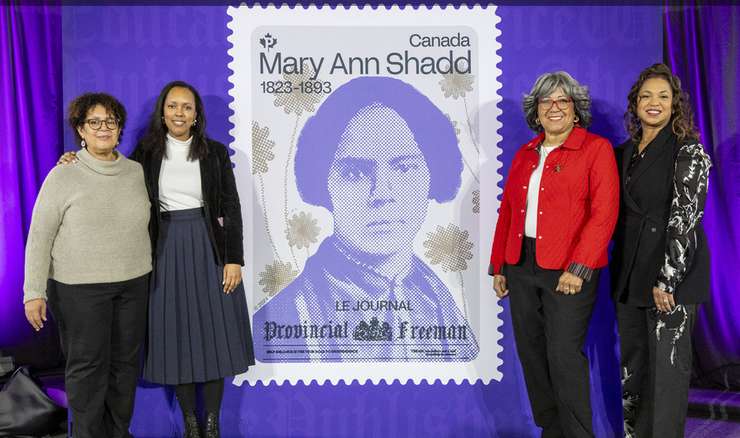
Canada Post issues Black History Month stamps to reveal the stories of courage, accomplishments, and contributions of Black Canadians.
"Hopefully, through these efforts – and those of others – future generations will benefit from the sense of pride and awareness that comes from better understanding the lives and challenges of those who came before," noted Canada Post.
The Elgin Settlement (now Buxton) was the largest and considered the most successful early Black community in Canada West.
Elgin Settlement, one of the last stops on the Underground Railroad, was established in 1849 by Reverend William King.
The stamp was designed by Underline Studio and illustrated by Natasha Cunningham. Canada Post said the central image on the stamp is the only known photograph of Shadd. The lower image is a reproduction of The Provincial Freeman's masthead that was recreated to include both of Canada's official languages. The metallic-inked black-eyed Susans represent resilience, encouragement, justice and motivation.
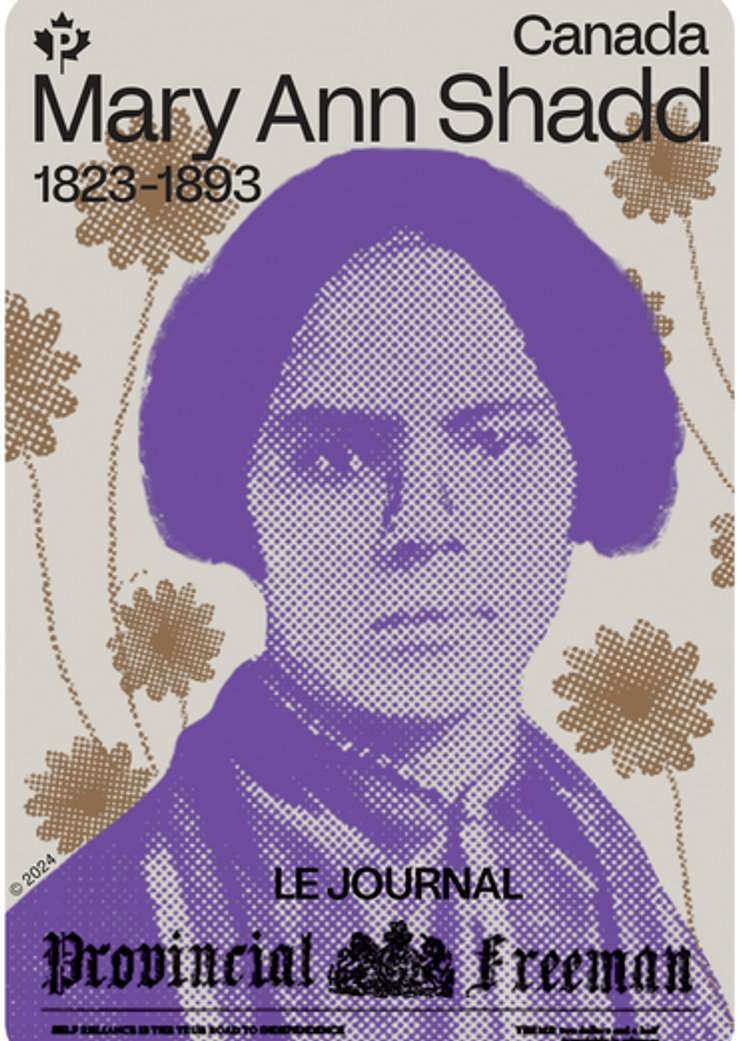
The issue includes a booklet of six domestic rate stamps. Stamps and collectibles are available at canadapost.ca and postal outlets across Canada.