
From wildfires to floods, smoke-filled skies to tornadoes, and heat waves to cold snaps Canada had an extreme ride when it came to weather in 2023.
Environment and Climate Change Canada ranked the country's top 10 weather stories according to several factors, including the impact the event had on Canada and Canadians, the extent of affected areas, associated economic impacts, and the longevity of events as a top news story.
Senior Climatologist David Phillips began his presentation by noting that the Canadian landscape took a real hit in 2023 from scorched forests to flooded-out roads to barren farmers' fields. "This is what climate change looks like," he said.
Despite the extreme events seen throughout the year, Phillips said the thing that shocked him most was the number of evacuations that took place nationwide.
The top 10 weather stories in Canada are as follows:
The year for record wildfires
Canada cloaked in smoke
Hottest summer - On Earth and in Canada
Deadly deluge in Nova Scotia
Canada: dry in the West and wet in the East
Hurricane Lee… No Fiona, but more than a windy day
April glaze storm in Montréal-Ottawa: more beast than beauty
Cold spells in a warm year
Flooded out: Quebec's record wet July
Canada Day tornado in Alberta
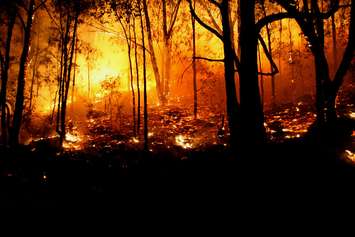
The record wildfires topped the list, in what Phillips called "the most obvious number one" in all the years he's been producing weather stories.
The wildfires affected millions of Canadians and even held the world's attention, as fire crews came from around the globe to assist and smoke and air pollutants reached from Canada to as far as Germany.
"The numbers are just mind-boggling," Phillips said. "The area burned - over half the countries in the world could fit in that area and still have scarred, burnt area left over. Take all the fires of the woodland burned in the United States in the last five years and that still wouldn't equate to what we burned this year," he added.
Canada's wildfires in 2023, were two and a half times worse than the previous worst year on record. "On June the 6th, there were out-of-control fires in every province and territory except Prince Edward Island and Nunavut," Phillips noted.
"The fires came early and stayed late," he said. Phillips also worried that we could see more of the same, as the snow and precipitation which should be rejuvenating and moistening the soil right now is nowhere in sight.
The smoke caused by the wildfires became its own story and took the second spot on the weather agency's list. Phillips mentioned that it is an ongoing story. "We really don't know the health effects of what [the smoke] is going to be," he said.
Canada, and the world, saw one of the hottest years on record and according to Phillips, it doesn't look like "normal weather" will be returning any time soon due to climate change.
"I think climate change is about the rare becoming the frequent, it's about the extraordinary becoming the ordinary and I think it will be hard to forget what happened this year with the weather in Canada. I think it will be harder to ignore that our fingerprints are all over it," Phillips concluded.