

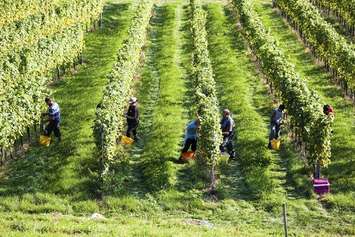
Ontario's fruit and vegetable producers have taken umbrage with critical comments on how temporary foreign workers (TFW) are treated.
The Ontario Fruit and Vegetable Growers Association (OFVGA) has responded to remarks made by Tomoya Obokata, the United Nations Special Rapporteur on Contemporary Forms of Slavery, on a recent visit to Canada.
"I am deeply disturbed by the accounts of exploitation and abuse shared with me by migrant workers," said Obokata, in comments posted to the UN's official news website. "Employer-specific work permit regimes, including certain Temporary Foreign Worker programs, make migrant workers vulnerable to contemporary forms of slavery, as they cannot report abuses without fear of deportation."
Obokata, a Japanese scholar on human rights and international law, called on the federal government to safeguard workers' rights.
Bill George, chair of the OFVGA's labour section, acknowledged that there is always room for adjustment but clapped back by saying Obokata's remarks were based on misinformation. He also objected to the comparison to slavery.
"Seasonal and temporary foreign workers are an essential part of local fruit and vegetable production in Ontario, and we do not support employers who mistreat or otherwise take advantage of people in their employ," said George. "We recognize there is always more that can be done to ensure all workers have the opportunity for a positive and safe working experience while they are here, but assigning hateful and broad labels to all the hardworking farmers and their employees in the program is not the solution."
George pointed out that the workers come to Canada legally through the Seasonal Agricultural Worker Program (SAWP) and the Temporary Foreign Worker (TFW) Program’s agricultural stream.
"Federal government statistics show that Canada’s agriculture sector has above-average employer compliance rates compared to other industries and sectors that use Canada’s government-approved temporary and seasonal worker programs," said George. "Particularly high, which is a testament to investments growers have made into worker safety, protection, and well-being in recent years."
George added that growers who employ TFWs often give these workers the same benefits as Canadian-born workers, such as competitive wages, access to healthcare through OHIP, federal employment insurance (EI), and others.
The OFVGA also stated that growers are required by law to provide workers with a copy of their rights and responsibilities, and farms are subject to frequent federal and provincial inspections.
A 24-hour multilingual telephone hotline is also available for workers who wish to raise concerns about their employment or working conditions.
According to Stats Canada, there were almost 27,000 TFWs employed in Ontario in 2021, with 61,735 working across Canada. That represented an 11.5 per cent increase from 2020 when the COVID-19 pandemic took hold.