While some residents are celebrating Chatham-Kent's new temporary bylaw that bans clearcutting of woodlots in the municipality, others believe it is unfairly singling out those in the agricultural community.
On Monday night, Chatham-Kent council narrowly passed a woodlot preservation motion in an 11-7 vote.
The temporary bylaw was first presented to council in 2013 and eventually voted down. Later in the year, council received but did not vote on, a draft bylaw to incorporate woodland conservation and preservation through regulation.
Local environmentalist Ken Bell has been a long-time advocate for protecting woodlots in Chatham-Kent and was involved in the process in 2013.
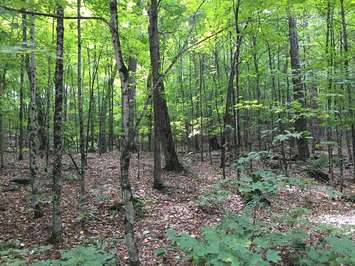
He called Monday night's decision a victory and with Chatham-Kent currently having one of the lowest percentages of tree coverage in the province, said it's something that has been ignored for far too long.
"There are regulations throughout the province but Chatham-Kent is a special case," said Bell. "When we amalgamated in 1998, this should have happened then. But it was left on the backburner and has gone on for so long, it became the norm for some people."
Bell said he's not against ending tree clearing completely but ultimately wants to see stricter measures in place.
He's hoping this time around, the end goal won't be focused as much on a single outcome, such as a permanent bylaw, but also include additional strategies like incentives to keep woodlots and funding for habitat restoration.
"Right now, there's no process. It's like the wild west. What we want to do is develop either a bylaw, or a process, or both," said Bell. "My goal and the goal of the people who are really supporting this, is about protecting woodlots. Period. All the other stuff is icing on the cake. Protecting woodlots is our number one goal."
Not everyone is welcoming the temporary bylaw with open arms, though.
Kent Federation of Agriculture President Jay Cunningham has spoken out against it on behalf of local farmers, expressing concerns that it infringes on the rights of what landowners can and can't do with their property. He said it hinders the operations of the agriculture industry, which often needs to clear land to grow crops.
"We are stewards of the lands, there are probably no better stewards of the lands than farmers," said Cunningham. "To think that we don't want that just because of how we utilize some of that land, you might not agree with it, but now your opinion is interfering with how we do business."
In 2014, Chatham-Kent council opted to adopt a Natural Heritage Implementation Strategy that focused on promoting conservation through education rather than a bylaw or penalties for clearing woodlots.
Cunningham said he was disappointed to see the bylaw come back for discussion and believes the Natural Heritage Policy struck a happy medium.
"We didn't see the need for [the new bylaw]. We thought the strategy was working fine. This is taking an extreme approach to something that everyone was still willing to discuss and review but we weren't given an opportunity to do that," he said. "To bring it forward right when the agriculture community is starting to get into one of its busiest seasons, I think is a little suspect. Why bring it up now? Because we're all busy and they don't think we're going to have time to fight it or deal with it."
Cunningham also said he believes the bylaw singles out farmland owners and creates an uneven playing field.
"The municipality itself and urban development are not on the same playing field as we are. They can clear trees and would not have to follow this bylaw," he said.
While Cunningham said he thinks the issue is a clear example of a rural-urban divide, there are some local agricultural members who say that is not the case.
Several local farmers have thrown their support behind the bylaw, including KFA member Chris Knight, who owns 100-acres of woodlot in southeast Chatham-Kent.
Knight said despite hundreds of thousands of dollars invested into the Natural Heritage Strategy, woodlots continue to come down and people continue to take advantage of the fact that there is no bylaw in place, proving a strategy alone is not enough.
"The reality is we all wish we had a level playing field and we all wish we could do what we wanted," said Knight. "But there are laws and there are rules. It's just become socially unacceptable in this day and age when we're all talking about climate change and we're all asking for subsidies for the effects of climate change to then push a woodlot into a pile, especially when we have roughly 3 per cent tree cover left in Chatham-Kent. It just doesn't jive and it paints all farmers in a bad light."
When asked if the KFA could be considering legal action, Cunningham said the group is examining all of its options but added he is confident that the situation will be dealt with by coming to a reasonable agreement.
"I cant speak for individuals who want to go down that route," said Cunningham. "We've got some very well-rounded, intelligent people in our group and I'd be surprised if something can't be worked out."
Long-time local farmer Bill Parks with Park's Blueberries echoed many of Cunningham's concerns, especially surrounding land rights.
Parks said he was disappointed in council's decision, adding that he believes it was persuaded by "well-meaning but misguided people" who are creating more interference in many farmers' operations.
"It's my land, I know how to operate it. I don't need council in there messing with me," said Parks. "If I wish to cut trees, I will cut trees and I will plant crops. If I wish to grow trees, I will grow trees. Let me operate my land as I wish to operate my land."
Parks said the municipality should continue to focus heavily on tree-planting initiatives instead of focusing on a bylaw that he said will mainly impact the local agriculture industry.
"I can appreciate that some of the world likes trees. Then I suggest they go and buy 100 acres with trees on it and pay for it with their earnings from their 100 acres," said Parks.
Rock Geluk, a grain and hog farmer from Ridgetown, said he believes any efforts by the municipality to increase tree coverage is set back by land clearing and thinks a conservation bylaw would benefit Chatham-Kent by providing a clear direction on how landowners can treat the natural environment.
He also contended that many nearby municipalities have already been successful in implementing conservation bylaws that protect tree coverage while protecting the agriculture industry.
"It's possible to do both, especially in Chatham-Kent," said Geluk. "We're only talking about 3 per cent forest cover that we're trying to protect. The rest is agriculture plus urban."
The temporary tree clearing bylaw will be in place for 120 days from the time it was approved Monday night. The time frame will allow Chatham-Kent staff to bring council recommendations based on research and engagement and look at how it wants the issue to be regulated.