

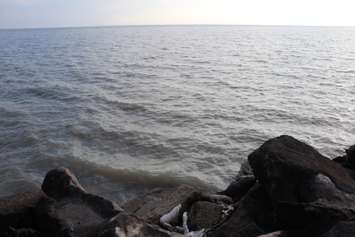
Lake levels in Chatham-Kent are around the same height they were at this time last year, but they're still far from what's considered to be average.
According to a standing message sent by the Lower Thames Valley Conservation Authority (LTVCA) in early November, the average daily water levels on Lake Erie at the beginning of November were around 174.65 metres. This is down about half a metre from this year’s peak daily average water level record set at the end of May. The average water level for the month of November last year was 174.68 metres.
Meanwhile, In Lake St. Clair, the levels at the beginning of the month were around 175.64 metres. This is also down about a half metre from this year’s peak daily average water level record set during the third week of May. The average water level for the month of November on Lake St. Clair last year was 175.71 metres.
Water level forecasts predict that levels on both lakes could drop between five and eight metres as we head into December.
LTVCA Watershed and Information Services Manager Jason Wintermute said it's common for water levels on Lake Erie to drop throughout the fall and then reach a point in the winter where levels remain flat for the rest of the season.
"We're getting pretty close to that point now," said Wintermute. "I think the recent lake level forecasts are suggesting it might drop another couple of inches and then we'll probably look to see it levelling out for the rest of the winter."
Despite water levels being slightly below where they were at this time in 2019 and forecasted to continue to drop, Wintermute said the risk of flooding and other shoreline damage remains very similar to what has been seen over the last few years unless temperatures can steadily dip below zero.
"We're pretty much in the same spot we were this time last year. That means throughout the winter, we're at the same risk," he said. "Throughout the winter it largely depends on if we can get some ice cover, whether the temperatures fall enough. Once we can get some ice cover on the lakes, that kind of locks it down, you're not getting waves that are hitting the shoreline. If we can get some ice cover on the lake, that would really help the shoreline."
According to Wintermute, there are some unique challenges and risks that can come from flood events in the winter.
"In places like Erie Shore Drive and Lighthouse Cove, we do get floodwaters making their way to the road. So if it freezes on the road, then you're talking really slippery ice conditions," he said. "Not to mention slippery ice conditions on peoples' properties, trees on shorelines can get weighed down with ice and fall."
Although lake levels may have dropped around a half metre from their peaks in May, Wintermute said they still remain well above normal levels. However, he added that some predictions suggest that the higher than average lake levels seen over the past few years could become the new normal.
"There's seems to be a slight trend over the past number of years of an upward trend in water levels on average," he explained. "When they start talking lake levels and what the average lake level is, they use around 100 years' worth of data. So at what point do we start saying 'this is the new normal?' It just kind of depends as we move forward and more of the recent history gets included in the average or we recognize that climate change has had a significant enough impact that we probably shouldn't be using data from 80 years ago."