

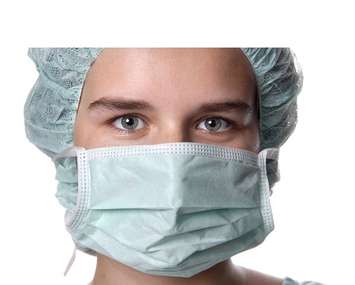
The CEO of the Chatham-Kent Health Alliance is defending the hospital's position on the use and distribution of personal protective equipment after some nurses complained about not having enough.
A few nurses, who wish to remain anonymous because they fear being reprimanded by the hospital's leadership, have reached out to Blackburn News to report they are stressed and anxious at their job because they are only getting one surgical/procedure mask per day. They also have doubts about the two week supply of PPE that the hospital's CEO says they have. Adding to the stress they said, is a patient that looks like they have the virus but the test comes back negative. As one nurse put it, they are not losing their minds but are stressed.
CKHA CEO Lori Marshall admitted hospitals are a highly stressful environment with a lot of anxiety.
"We don't know who may be coming in the door and that level of uncertainty adds to the stress of every single individual who is working in hospital," Marshall said.
Marshall said the two week PPE supply is adequate and she is comfortable with it and added all hospitals practice conservation measures and appropriate distribution of equipment. Dr. David Colby, the medical officer of health in Chatham-Kent, said the hospital can recycle surgical masks by washing them and reusing them.
The nurses claim the CKHA recently rejected N-95 masks that were being offered, saying they had enough. However, CKHA Communications Director Fannie Vavoulis said, to the best of her knowledge the hospital has not turned down any N-95 masks from donors.
"There have been some masks that were offered and declined if they did not meet the specifications required for use in a health care setting," she said. "We monitor PPE stock levels daily and will modify these practices when we are confident that we can safely do so."
She said all staff is informed every week about the PPE stock and usage levels.
The nurses also report some of them are not being properly trained and are uncomfortable performing swab tests. But Vavoulis said a small team of two to four nurses is testing residents in long term care homes and appropriate training is provided by the CKHA professional practice team, supported by appropriate policies and procedures.
"Nurses are provided with appropriate PPE when in long term care homes performing swabbing. These precautions are supported by research-informed guidelines and protect both residents and staff," added Vavoulis.
Marshall said only one local nursing home has expressed being uncomfortable with the level of swab training it received.
The nurses at CKHA also have questions about why residents at long term care facilities are getting swabbed but the front line health care workers doing the swabbing are not.
Dr. Colby said anyone in Chatham-Kent with new respiratory symptoms gets tested. He said not everyone gets tested because it overwhelms the laboratories and delays the process for those who need them. CK Public Health also reported that all residents and staff in long term care homes are tested for COVID-19 as a one-time surveillance study to allow homes, public health units, and the province to better understand the prevalence of COVID-19 in long-term care homes and inform future planning. The local public health unit has partnered with the Chatham-Kent Health Alliance to test nearly 2,000 residents and staff in the seven long-term care homes in Chatham-Kent. The testing should be complete before May 13 but to date, health officials report no one in a long-term care setting has tested positive for the virus.
Marshall is also telling people not to avoid the emergency department if they have an urgent need. She said it's the best and most appropriate place to get emergency care for ailments like heart attacks, strokes, falls, and other emergencies. Marshall said the emergency department has seen a drop in the number of patients lately and is seeing about half the patients it normally does. She said the ER normally sees 100-110 visits a day but now it's closer to 60 or 70 visits a day. Injured and sick people around the world have been avoiding the hospital because they fear to get sick with COVID-19.