Chatham-Kent's Climate Change Action Plan is officially kicking off.
On Monday, council approved the terms of reference for the Climate Change Action Plan (CCAP), which is the general outline of the plan, the time frame and its key points. The CCAP comes after a climate change emergency was officially declared in the municipality in July 2019.
The plan will look at mitigation, things that are causing climate change as well as adaptation, how to minimize the local consequences of climate change. It will also tackle both the community and the corporate side of things.
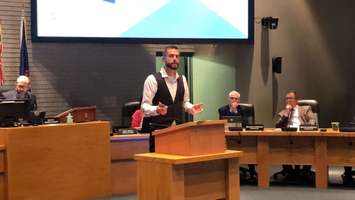
"[The terms of reference] talk about the steps we're going to take to complete the various pieces of the project that we need to build on to get to a final product, which is a climate change action plan that increases the community's resiliency to climate change and reduces greenhouse gas emissions where we can," explained Environmental Planner Gabriel Clarke.
The main actions and strategies of the action plan will address the following:
• Reduce greenhouse gas emissions generated within the municipality
• Reduce the community's vulnerability to climate change
• Increase the community's ability to cope with the consequences of climate change
• Increase local preparedness and self-reliance for future climate change
• Identify actions that the community can implement to take advantage of any opportunities that may emerge due to climate change
The plan is scheduled to be completed in June 2021 and includes three "milestone" stages before being implemented; initiation, research and planning.
Developing the plan will rely heavily on resident engagement and feedback, which is set to start in January 2020 and last for several months. According to Clarke, who is heading the creation of the plan, there will be a variety of different engagement methods including social media campaigns, industry meetings and initiatives involving locals schools.
Clarke said resident engagement is one of the most vital parts of the plan but can also be one of the most difficult.
"Community engagement is much less straight forward from an ability to affect change directly. It's going to involve various segments of the population. It's going to involve our businesses, our farm community. Each of those and many more of our community groups are going to have interests that are going to be unique to theirs," said Clarke. "What we need to do through this plan and the engagement process is to identify what those interests are so we can develop actions that respond to those interests."
The terms of reference were approved unanimously, but not without some questions.
Councillor Doug Sulman said he was looking forward to seeing the final outcome of the plan and was hopeful that the Municipality of Chatham-Kent will reduce its carbon footprint. However, he also expressed his concerns about some specifics of the plan including shoreline adaptation.
"I don't think we can control the Great Lakes in Chatham-Kent. The last person who tried to hold back water was Moses and he could only do it for a limited period of time. I don't think that we have the ability to do that," said Sulman. "We don't have the financial ability."
Clarke, who has previously completed action plans for two other municipalities, said it's all about making positive changes at a local level wherever feasible.
"At the end of the day, we're able to maintain our sense of community as we manage what we can, recognizing the fact that lake water levels are going to rise and we have no control over that. If we recognize that we don't have control over that, let's control what we actually have control over and implement what we can, where we can, whenever it's affordable to do so," he said.
One of the next steps will be a climate change background report coming to council in early 2020. The report will place climate change within the context of Chatham-Kent and highlight past and future changes in local climate patterns along with an inventory of previous efforts to reduce greenhouse gas emissions.
According to Clarke, there will be frequent updates throughout the whole process of the plan's creation.
"If I were to guess, probably on a quarterly basis if not sooner," he said. "We're going to be keeping the public informed as things roll out."
Once the final plan is brought to council in 2021, if it is approved and implemented, it will be updated regularly along with regular reports tracking its progress.
As for the cost of completing the plan, the price tag will remain relatively low because the work is being done by internal resources. There is $50,000 remaining in the planning services budget that was approved for climate change action planning in 2018. Some of that budget will be required primarily for the engagement component of creating the CCAP.