At least one trade expert believes the foreign affairs minister will like at least some of the details of a new trade pact between Mexico and the U.S.
The preliminary agreement, announced on Monday by U.S. President Donald Trump, could serve as a framework for a trilateral agreement.
Bill Anderson, the director of the Cross-Border Institute at the University of Windsor, said there are still many issues to resolve, and not much time to do it, but the new auto rules should work in Canada's favour.
 auto assembly plant. File photo courtesy of © CanStockPhoto.com/microolga
"The big issue between the United States and Mexico was low-wage labour," explained Anderson as he pointed out the agreement calls for 45% of all vehicles to be built by workers who make more than $16US/hr. "That actually benefits Canada as much as it benefits the United States because our wages would be on the high [end]."
The auto rules also require 75% of all vehicles to be built within one of the pact member countries.
Before car and auto-part makers pop the cork on the champagne, Anderson cautions there is still no agreement on intellectual property, dispute resolution, or the thorny issue of supply-management for dairy. If an agreement can not be reached on those, favourable rules for the auto industry could be a moot point.
Trump has suggested if Canada does not come on board, the U.S. and Mexico will sign a bilateral agreement. He also again threatened to impose tariffs on imported vehicles and auto parts.
While some may argue the automotive industry is not the end all and be all of the Canadian economy, Anderson said there's no understating its importance in Ontario.
"Especially here in Ontario, you can lose jobs in automotive faster than you can get them anywhere else," Anderson said. "Ontario's number one export to the United States is cars. It's 14-times bigger than our number two export."
 Photo courtesy Farm & Food Care Ontario
During the original North American Free Trade Agreement negotiations, Canadian officials walked away from the table over Chapter 19, the dispute resolution mechanism, but Anderson thinks it is dairy that threatens Canada's participation this time.
"I think the reason that the U.S. has gone along with this in the past is it's such a tiny proportion of Canada-U.S. trade," he said. "The problem is that the President has made an issue of this... It's going to be a little bit hard for him to climb down on it."
It will be hard for Canadian officials to climb down on dairy rules too.
Quebec Premier Philippe Couillard does not plan to budge on the protectionist rules that favour Canadian farmers. All three main federal political parties endorse supply-management, and with both a national election and a Quebec election in the offing, it may be difficult for most politicians to compromise it.
Canada has made compromises in the past, however, in trade agreements with Pacific-rim nations and the European Union.
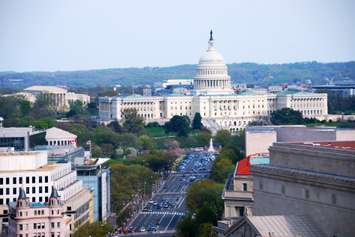
Hanging over the challenges facing Freeland is the demand to sign on by September 1. Trump wants to have a deal, at least in principle, to present to Congress before the mid-term elections. Anderson doubts Friday is a realistic deadline.
"I've been watching for 35 years, and if you think it's going to be resolved by Friday, you're wrong," he laughed. "I think there is room for Canada to continue negotiating on these issues through the month of September. But once they get through the month of September, the clock that is set by Congressional legislation essentially says that by that time they have to have something in writing that describes the deal. If Canada and the United States can't come to an agreement on that, then you're going to have a situation where Canada can't be part of that deal that goes to Congress."