Households that comprised of just one person are at an all time high, and more Canadians than ever speak a language other than English or French at home.
Statistics Canada has released the latest data on families and languages from the 2016 Census showing how we are evolving as a society.
The percentage nation-wide of one-person households is now 28.2%, up from 25.7% in 2001. In Ontario, the percentage is 25.9%. The agency suggests greater economic independence, an aging population, and a higher life-expectancy account for the increase in more seniors than ever living alone.
In the U.S., 27.3% of all households are those living alone, 28.5% in the United Kingdom, 34.5% in Japan, and 41.1% in Germany.
An aging population also accounts for an increase in the number of empty-nesters, although more couples are choosing to forego parenthood. They make up 45.5% of Ontario households compared with 54.5% of couples with children at home.
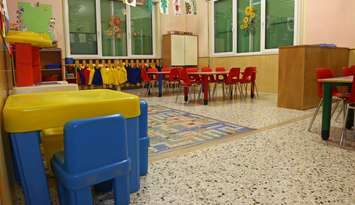
 (CanStockPhoto.com photo)
More couples are forgoing marriage too. The percentage of common-law unions is up to 21.3%, a dramatic shift from 1981 when just 6.3% of couples were unmarried. That is significantly more than in the U.S., where just 5.9% of couples decided not to tie the knot in 2010, but well below the percentage in Sweden at 29%.
The number of multi-generational families, or at least three generations living under the same roof, increased 37.5% but still only makeup 2.9% of all households across the country, or 3.9% in Ontario.
Canada is increasingly becoming a multilingual nation.
While the vast majority of Canadians speak either English or French, 93.4%, 18% more of us than ever were listed as bilingual in Canada's two official languages, English and French in 2016. The percentage is up from 17.1% in 2011.
Those who named English or French as their mother tongue decreased, as it has in each census. It was 78.9% in 2016, 80.2% in 2011, and 82.4% in 2001.
According to the census data, 7.7-million of Canadians speak what is called an "immigrant mother tongue" at home, and the languages themselves are changing. Those who say they speak Italian at home fell 10.9%, Polish fell 5.5% and German 3.3%.
The fastest growing language is Tagalog Pilipino which jumped 35%, but the most widely spoken "immigrant" language outside is Mandarin, followed by Cantonese, Punjabi, Spanish and Arabic.
Statistics Canada will release the next batch of data on September 13 detailing changes in household income.