
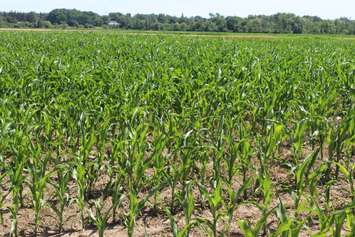
Crops are still suffering in Chatham-Kent due to the wet soil conditions this spring and summer.
University of Guelph-Ridgetown professor Dave Hooker says the heavy rainfalls in the area may reduce yields for this season.
"The crops are suffering in some cases because of those wet conditions, and that may result in reduced crop yields, especially where wet conditions have resulted in root damage and root diseases," he explains.
Hooker says too much rain can strip the soil of nitrogen, which is essential to growing crops.
"We can respond by maybe putting or applying more nitrogen to make up for some of those losses, or maybe for next year we can modify our strategies to mitigate some of these risks, such as split nitrogen applications and things like that," he says.
According to Hooker, mother nature has been especially fickle this season.
"Across the province and even in the southwestern parts of the province, there have been some areas that have been dry since early or mid May. Other areas are just experiencing a lot of wet or soil saturated kind of conditions. That's causing all kinds of crop management challenges and issues," explains Hooker.
Hooker is working with local farmers and experts to find ways to improve soil conditions and avoid crop losses.
He shared his expertise at the Southwest Diagnostic Day event on Wednesday at the University of Guelph Ridgetown Campus. Over 400 local farmers, growers, agricultural consultants attended this year's event, which had several presentations about various crop related topics.