

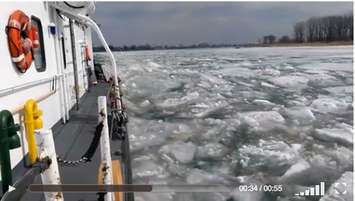
Coast Guard officials have only just put the 2015 ice breaking season behind them, but say it has implications for the coming year.
Director of vessel traffic services, with the U.S. Coast Guard, Mark Gill says the past winter suggests lake levels could go up some more.
"When you have expansive ice cover like we had that certainly puts a damper on evaporation in the winter and early spring," he said. "We had record snow falls here in the western Great Lakes."
Gill says weather services on both sides of the border start preparing projections six months in advance, and if water temperatures are higher than normal over the summer that could result in lower ice coverage the following winter.