
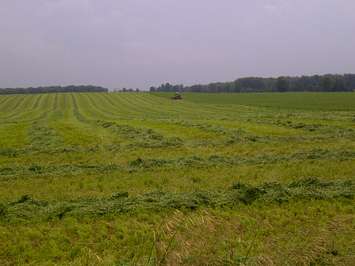
OMAFRA says the recent rainfall will significantly help new growth in hay.
The field crop team notes flower or headed plants should be cut to stimulate new growth.
This week's report says farmers should take caution though, as the risk for high nitrate levels is at it's peak 5 to 7 days after rainfall ends a drought.
The team says most of this year's spring wheat has been harvested with average to below-average yields.
They also feel the quality has been excellent for the majority of the area.
Many corn fields are under-developed and have incomplete pollination do to this summer's drought.
OMAFRA says in some cases this has left a third of the cob unpollinated.
They point out the selling drought-stressed corn as silage is an option, though determining an equitable price point can be difficult.
Farmers should also consider potential grain content and removal of crop residue and fertility from the fields.
The ministry also says the recent rain will help soybean pods fill out.
And, as an added benefit, the rain should also reduce the pressure from spider mites.