

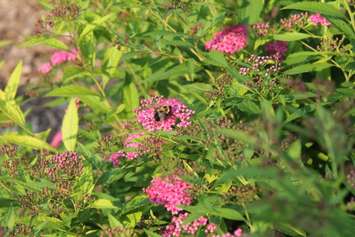
A new study suggests low levels of pesticides can have an impact on how bumblebees learn.
Researchers found that bumblebees exposed to a what they termed 'a realistic level' of a neonicotinoid insecticide collected more pollen - but took longer to do so than control bees.
The pesticide exposed bees also chose to forage from a different flower than the control insects.
And the control bees were able to learn how to manipulate complex flowers after fewer visits than the exposed bees needed.
Professor Nigel Raine of the University of Guelph was senior author of the study paper.
He suggests if exposure to low levels of pesticide affects their ability to learn, bees may struggle to collect food.
Professor Raine suggests that could also impair the essential pollination services they provide to both crops and wild plants.
He argues there's an increasing need for field-realistic research into the impact of all pesticides on bumblebees and other wild pollinators.
The study was supported by the U-K Insect Pollinators Initiative.