
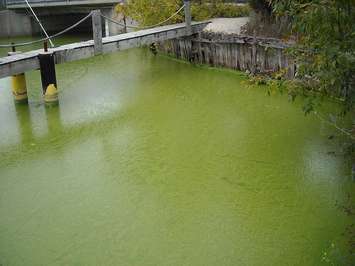
Conservations groups have announced a pilot project to demonstrate agricultural practices that could help end algae blooms in the Great Lakes.
The Lower Thames Conservation Authority is offering incentives to farmers in a 20 square kilometre area north of Fletcher to change the way they work their soil to try and keep phosphorous from leeching into Jeanettes Creek.
The Authority's Colin Little says runoff in the area will be monitored at a number of pumping stations.
"The idea of the program is we are going to implement a lot of agricultural best management practices as farmers, cover crops, alternative phosphorous application practices and crop and field nutrient management plans," he says. "We'll test it here, get some results see if it is an approach we should take watershed wide."
===
The Authority's Colin Little says runoff in the area will be monitored at a number of pumping stations.
[audio mp3="http://blackburnnews.com/wp-content/uploads/2015/12/COLINLITTLE-1.mp3"][/audio]
===
Little says the test area will try different tillage methods and try to measure their effectiveness.
[audio mp3="http://blackburnnews.com/wp-content/uploads/2015/12/COLINLITTLE-2.mp3"][/audio]
===
Little says they're offering incentives to farmers in a 20 square kilometer area near Jeanettes Creek to try different tillage methods to keep the phosphorous out of the waterway.
[audio mp3="http://blackburnnews.com/wp-content/uploads/2015/12/COLINLITTLE-3.mp3"][/audio]