
The dust is settling, or at least the flurry of news releases supporting or trashing Canada's acceptance of the Trans Pacific Partnership trade deal has slowed a little and maybe we can all take stock.
[audio wav="http://blackburnnews.com/wp-content/uploads/2015/10/Thurs-Oct-8.wav"][/audio]
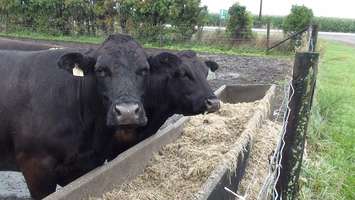
In agriculture it looks like Angus won and Holstein lost. That is to say beef producers like the deal, dairy not so much although clearly it isn't as bad as dairy farmers feared. More about that in a minute.
Pork producers are winners and the Grain Farmers of Ontario are positively gushing over the deal.
Chicken and egg producers. Well I don't know. Some of our local stores have been feature American eggs for some time so the slope has already been slippery.
Oh and the sugar beet growers of Southwestern Ontario and Alberta like the idea too they have ambitious .
The winners and losers in agriculture are not just my opinion I'm pretty much summing up their news releases here.
We also have to remember that agriculture doesn't exist in a vacuum. In assessing whether it is good for the country or not we also have to assess whether it is good for our neighbours.
Initially it looks like it is not good for the auto industry, but may be for other industries. There is a company in the city I live in for example that builds everything from grain elevators to food processing factories in many parts of the world.
Will this be good for them? I don't know but it might open a few more markets.
Now back to dairy. We know it isn't as bad for milk, cheese and butter producers as they expected because New Zealand doesn't like it either. Officials in their dairy industry admit they didn't get nearly as much as they want, but here's the slippery slope, they are adamant they see it as opening the door a crack and will come back to try and open that door wider.
So maybe it is the trip down the slippery slope that makes it a problem for dairy producers not just the actual hit of opening the market a little.
Here's a poser for you. We all know some national media have an agenda of getting rid of supply management, to the point where they have for years insisted dairy was subsidized when in fact it gets or got it's money from the market place. Albeit a market place where it has some say in prices.
Many with that national agenda never accepted the dairy industries argument and never actually gave the dairy industry the chance to even make that argument in rebuttal.
So I was interested to read in one of these publications recently that the transition funding that dairy is getting, takes away the argument it is not subsidised. Possibly the first time that publication even admitted the argument existed.
So here is the question; is it odd that the wording in some of these publications for help for the auto industry is transitional "funding," while assistance to the dairy sector is referred to as transitional "subsidy?"
The real concern is that there is already a lot of tweeting and letter writing about how we shouldn't be signing on to a trade deal that results in "subsidizing" dairy.
Perhaps ingraining the "subsidy" word is the next slip down that slippery slope and the next time negotiators sit down to reassess the deal, and there will be a next time, perhaps that change will mean less support for the industry among the public.
If that is the case, the real damage would be done not by a small percentage of imports but by the plan to help dairy farmers adjust.